
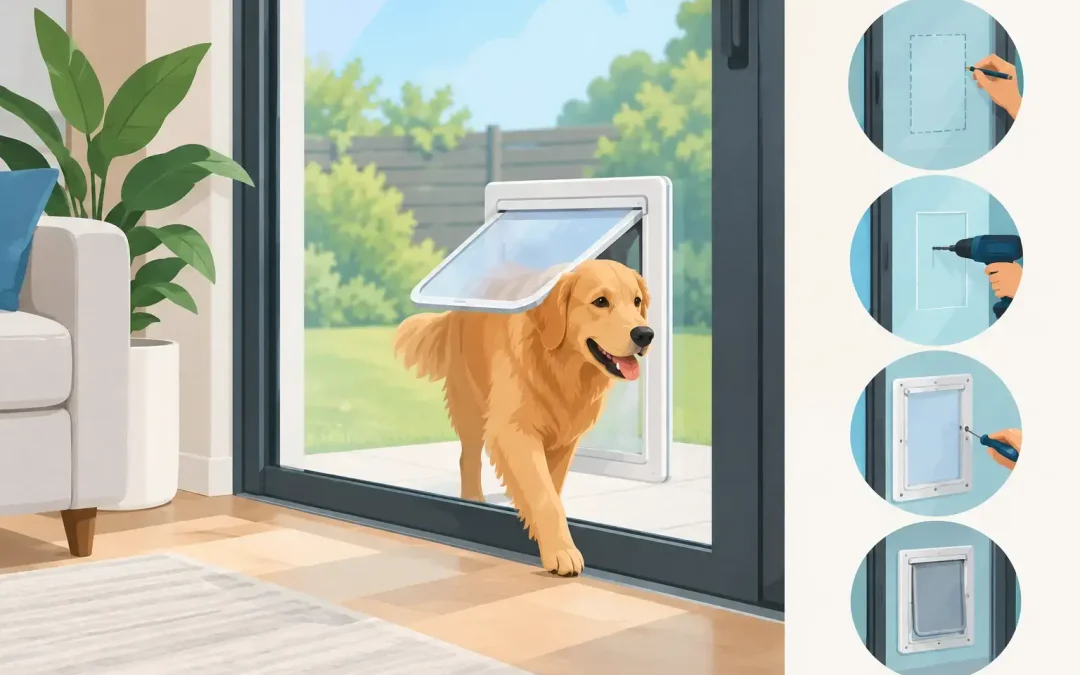
A pet door can save a surprising amount of time at the back door, particularly when your dog or cat has decided you are their full-time doorman. But learning how to fit pet doors into glass is not as simple as cutting a hole and dropping a flap into place. The type of glass in your door changes the job completely.
For many Auckland homes, the safest, cleanest result is a purpose-made replacement glass panel with the pet door fitted by a qualified glazier. It looks tidy, keeps the door working properly and avoids turning a useful home improvement into a broken-glass problem.
How to fit pet doors in glass doors
The first step is not choosing a drill or a saw. It is identifying the glass. A glazier will assess whether the panel is standard glass, toughened safety glass, laminated glass or part of a double-glazed unit. Each option has different limits.
Toughened safety glass is common in doors because it is made to break into small, less hazardous pieces if damaged. Once it has been toughened, it cannot be cut, drilled or resized. Trying to alter it will usually cause the entire pane to shatter.
Double-glazed glass needs the same care. The sealed unit cannot simply be cut on site without losing its insulation and weather seal. Instead, the usual solution is to measure the existing panel and manufacture a new double-glazed unit with the opening prepared before the glass is assembled.
This is why fitting a pet flap into glass is usually a replacement-panel job, rather than a quick DIY cut-out. The original glass comes out, the new panel is installed with the opening in the right position, and the pet door is fixed into that opening.
Start with the right pet door
Choose the pet door before anyone measures the glass. Every flap has its own cut-out size, frame dimensions and minimum clearance requirements. Taking measurements from an old template or estimating the opening can leave you with a panel that does not suit the flap you buy.
Think about your pet now, but also consider how they will move through the door as they grow older. A young puppy may fit through a small flap today, while a larger breed will need room to step through comfortably without ducking or squeezing. For cats, check the flap is wide enough for their shoulders and not only their head.
Security and convenience matter too. Basic flaps suit many households, while lockable models help when you want to keep pets indoors overnight. Microchip-operated pet doors can prevent neighbourhood cats from wandering in for a meal, although they need batteries and should be checked regularly.
For a glass door, select a model designed for glazing. These have clamping frames that sit securely on both sides of the glass and cover the cut edge neatly. The manufacturer’s installation instructions will show the required glass opening size and any limits on glass thickness.
Choose the best position for your pet
The bottom of the pet door should sit at a height your pet can use without jumping. A good guide is to set the base close to your pet’s belly height, although the final position also depends on the door frame, glass panel size and the pet door manufacturer’s instructions.
Keep enough glass around the opening. A flap placed too close to an edge, corner or frame can weaken the panel or leave too little room for the fitting system. A central lower position is often practical, but there is no one-size-fits-all measurement.
Before confirming the location, look at what is on both sides of the door. Outside, make sure your pet has a safe landing area rather than a drop, steps or a narrow path. Inside, check the flap will not open into furniture, a curtain or a spot that stays wet after rain. If the door opens across a deck or courtyard, make sure it can still swing freely once the pet door is in place.
For rental properties, obtain the owner or property manager’s approval before ordering replacement glass. A written approval can prevent arguments later, especially if the original door needs to be restored at the end of a tenancy.
Measure the door and glass panel properly
Accurate measuring is where a professional installation earns its keep. The glass panel must suit the door, the pet door opening and any existing glazing system. A few millimetres out can mean the panel will not sit correctly in its frame.
A glazier will normally measure the visible glass, check the full panel size within the frame and confirm the glass thickness. They will also identify the glazing beads, seals and clearances that affect removal and refitting. On older timber doors and some aluminium joinery, the way the glass is held in can be just as relevant as the size of the pane.
Take note of any safety markings in the corner of the glass. These can indicate toughened safety glass, but an experienced glazier should still assess the panel before work is booked. Do not rely on a visual guess alone.
If your door has decorative glass, low-e coating, tinting or a patterned finish, tell the glazier early. A replacement panel may need to match nearby glass as closely as possible. This can affect cost and lead time, but it is better than fitting a clear panel into a door where every other pane is tinted.
What a professional glass pet door installation involves
Once the measurements and pet door details are confirmed, the replacement glass panel is made with the opening prepared at the factory. For safety glass, all cutting and shaping is done before the toughening process. For double glazing, the new unit is assembled around the prepared opening so its sealed performance is maintained.
On installation day, the glazier carefully removes the existing panel, fits the new glass into the door and ensures it is supported and sealed correctly. The pet door is then fixed through the prepared opening, with its inner and outer frames aligned so the flap swings without catching.
The final checks are simple but worthwhile. The door should still open, close and lock normally. The pet flap should sit level, seal properly and move easily. Any glass offcuts or broken material should be removed from the work area, particularly if children and pets use the space.
Glass Direct can assess existing glass doors and arrange custom-fit panels for pet flaps, taking the uncertainty out of measurements, glass type and installation.
Can you fit a pet door yourself?
You can fit the pet door frame yourself if a new glass panel has already been made with the correct opening, and you are confident following the manufacturer’s instructions. However, the glass work itself is not a job to improvise.
Do not attempt to cut toughened glass, drill an installed double-glazed unit or force a pet flap into an opening that is too small. Aside from the risk of breakage and injury, an incorrectly fitted flap can let in wind and rain, rattle in the frame or create a security weak point.
DIY can make more sense for a timber door, provided you have the right tools and understand the door construction. Even then, check for internal braces, insulation, wiring or hardware before cutting. Glass doors need a different approach because the panel must be made to suit the opening from the start.
Keep the new pet door working well
A good pet door should need very little attention, but a quick check every few months helps it last. Wipe dirt from the flap and frame, clear hair from the hinge area and make sure the locking tabs still engage. If the flap has magnets, check they are holding the door closed rather than leaving a gap on windy days.
For microchip models, replace batteries before they go flat and keep the sensor area clean. If your pet seems reluctant to use the flap, prop it open briefly and encourage them with treats or their favourite toy. Avoid pushing them through it, as that can make them wary of the door.
A properly fitted pet door should make daily life easier without compromising the safety or appearance of your glass door. Get the measurements right, use a flap made for glazing and let the glass work be handled by someone who knows what they are looking at. Your pet gets independence, and you get a quieter trip to the back door.