
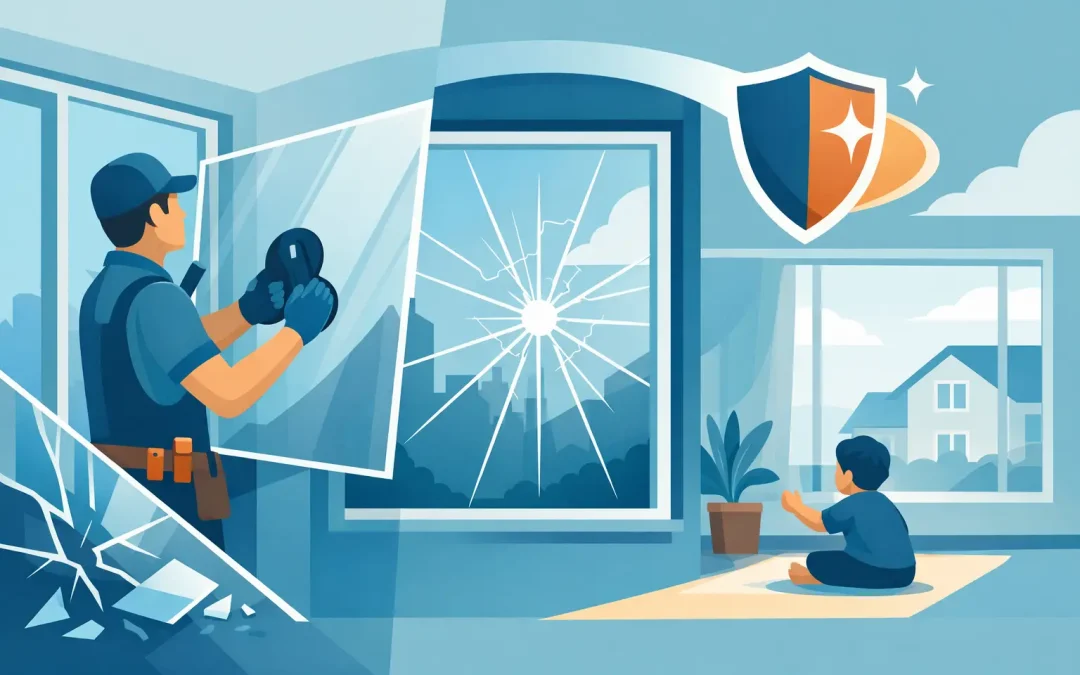
A cracked window beside a doorway, a shattered bathroom pane or a broken glass door is more than a job for the weekend. Window safety glass replacement is about removing an immediate hazard and making sure the new glass is suited to where people live, walk, play and work.
Ordinary glass can break into sharp, dangerous pieces. Safety glass is designed to reduce that risk, but the right replacement depends on the window’s location, the frame, the size of the panel and how the area is used. A qualified glazier can assess the damage, secure the opening and explain the practical options without making the process complicated.
When is safety glass needed?
Safety glass is generally used in places where accidental impact is more likely, or where broken glass could cause a serious injury. Think of a low window near the floor, glass beside a door, a full-height panel, a bathroom window or a shopfront exposed to passing foot traffic.
It is also common around stairs, landings, decks, pool areas and internal glass partitions. The exact requirement can vary depending on the building, the glass location and applicable building rules. That is why replacing a broken pane with what looks similar is not always enough. The replacement needs to be checked properly, not guessed from the street.
For landlords and property managers, this matters even more. A damaged or incorrectly glazed panel can create a safety issue for tenants and visitors, as well as an avoidable headache during an inspection or insurance claim. Prompt assessment helps protect people and keeps small problems from becoming drawn-out repairs.
The two main types of safety glass
Most window safety glass replacement jobs involve either toughened glass or laminated safety glass. Both are safer than standard glass, but they perform differently.
Toughened glass
Toughened glass is heat-treated to make it stronger than ordinary glass. If it breaks, it is designed to crumble into many small, blunt-edged pieces rather than large sharp shards. You will often see it in shower screens, glass doors, low-level windows and areas where people may bump into the glass.
It is a practical choice where impact resistance is needed and a clean, clear finish matters. One trade-off is that once toughened glass has been made to size, it cannot be cut, drilled or altered. Accurate measuring before manufacture is essential.
Laminated safety glass
Laminated glass has two or more layers of glass bonded with a tough interlayer. When it breaks, the interlayer helps hold the pieces together. This can reduce the chance of glass falling into a room or onto a walkway.
It is often useful where security, noise reduction or glass retention is a priority. For example, a ground-floor window, a panel near a busy entrance or a window above a path may benefit from laminated glass. It may crack under force, but it can remain in place long enough to keep the opening more secure until replacement is arranged.
Neither option is automatically better in every situation. Toughened glass can be ideal for a shower or door panel, while laminated glass may make more sense where keeping the pane intact after damage is valuable. The frame and existing glazing system also affect what can be installed.
Signs you should arrange replacement quickly
A fully smashed pane is an obvious emergency. But less dramatic damage can still need prompt attention. A crack can spread with vibration, temperature changes or pressure on the frame. Chips around an edge can weaken the whole panel, particularly if the damage is close to a corner.
Moisture between layers of double glazing, loose glass in a frame or a damaged seal should also be checked. These issues may not leave glass on the floor, but they can affect insulation, weatherproofing and the panel’s stability.
If there are children, pets, customers or staff near the damaged area, keep them away from the glass. Do not press tape directly onto a cracked pane in an effort to hold it together, and do not try to remove large pieces without suitable protection. Clear the immediate area, avoid touching sharp edges and arrange professional help.
For a commercial property, it is also worth thinking beyond the pane itself. A damaged entry window or shopfront can affect security, presentation and trading hours. Temporary protection may be needed while the correct glass is measured and prepared.
What happens during window safety glass replacement?
A good replacement starts with an assessment, not a one-size-fits-all quote. The glazier will look at the damaged panel, its location, the frame condition and whether the existing glass is safety glass. They will also check practical details such as panel size, access and whether the glass needs a particular tint, pattern, coating or finish.
If the glass is dangerous or the property cannot be secured, the first priority is making the area safe. Depending on the job, this can involve carefully removing loose fragments and temporarily covering the opening while replacement glass is arranged.
The replacement pane is then measured precisely and selected to suit the application. On installation day, the old glass and damaged materials are removed, the frame is prepared and the new panel is fitted with the appropriate glazing materials. A careful installer will leave the work area tidy and take the broken glass away rather than leaving you with a pile of sharp rubbish to manage.
For custom-sized windows, specialty glass or some double-glazed units, manufacturing time may be required. It is better to wait for accurately made glass than force an unsuitable panel into a frame. Your glazier should be clear about timing, any temporary measures and what is included in the work.
Don’t overlook frames, seals and surrounding damage
Glass is often the visible part of the problem, but it is not always the only damaged part. A hard impact can bend an aluminium frame, split timber beading or damage rubber seals. If these parts are not addressed, a new pane may rattle, leak or sit under unnecessary pressure.
Older frames can present their own challenges. The replacement glass needs to fit safely within the available depth, and the glazing method needs to suit the frame. This is another reason DIY replacement is risky, especially with safety glass. The panel may look straightforward, yet the wrong thickness, incorrect packing or poor installation can lead to future breakage.
Safety glass and insurance repairs
If damage has happened through a break-in, storm, accident or vandalism, take a few photos before the area is cleaned up if it is safe to do so. Your insurer may need evidence of the damage, and property managers may need records for owners or tenants.
You do not need to know every glazing term before making the call. Explain what happened, where the glass is located and whether the opening is exposed or unsecured. A professional glazing team can help identify the likely replacement and provide the information needed for an insurance process.
It is sensible to check your policy excess and claim process, particularly for smaller residential jobs. Sometimes arranging the repair directly is simpler; other times an insurer-approved repair path is the right fit. The key is not delaying urgent safety work while paperwork is sorted.
Choosing a glazier for safety glass work
When people are looking at a broken window, speed matters. So does getting the details right. Choose a glazier who can assess the site, explain whether toughened or laminated glass is appropriate, measure accurately and handle the job from removal through to clean-up.
Ask what type of glass is being proposed and why it suits that location. For larger, low-level or high-traffic panels, that simple question can give you confidence that the replacement is being treated as a safety repair, not just a pane swap.
Glass damage is stressful enough without chasing multiple trades or wondering what happens next. Glass Direct keeps the process straightforward: make the area safe, assess the right replacement, fit it properly and leave the space clean. If a pane is cracked, loose or shattered, getting it checked early is the simplest way to keep your home or business safer.