
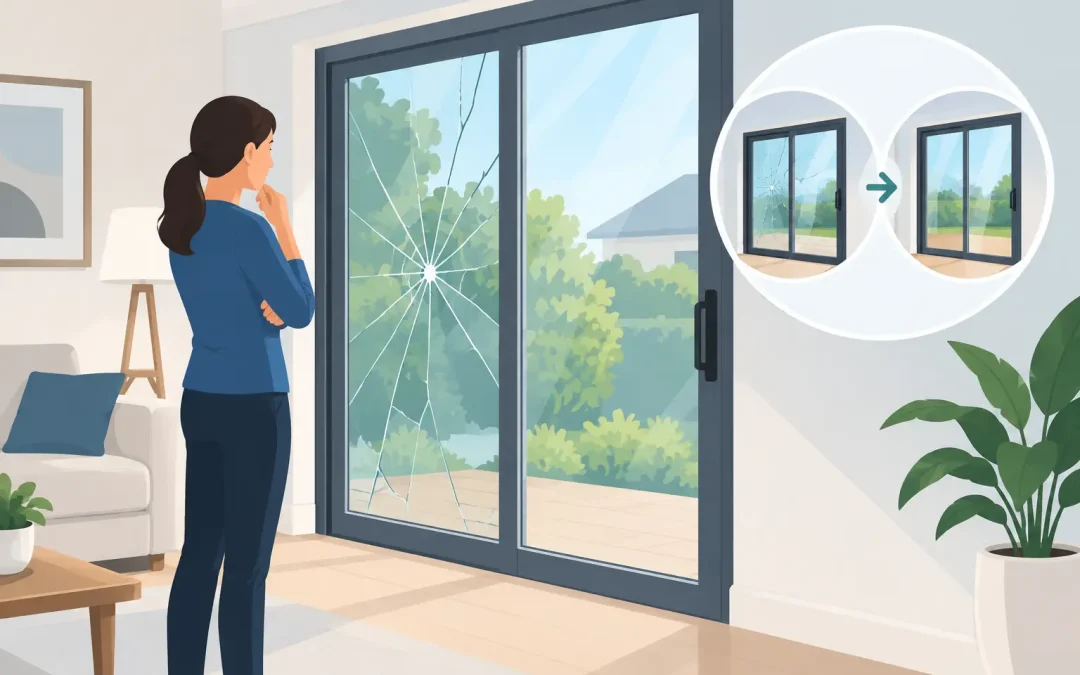
A glass door can go from a small annoyance to a safety or security problem very quickly. Knowing when to replace damaged glass doors helps you act before a crack spreads, a door becomes unsafe to use, or your home or business is left exposed. The right answer depends on the type of glass, where the damage is, and whether the door still operates safely.
A minor mark does not always mean a new panel is needed that day. But broken, loose or badly cracked glass is not something to put off. Around children, pets, customers and busy entryways, damaged glass needs a prompt, professional assessment.
When to replace damaged glass doors
Replacement is usually the safest option when the glass is shattered, has a deep crack, or has damage close to the edge of the panel. Glass is strongest when its edges are intact. Once a crack reaches an edge, movement from opening and closing the door can cause it to travel quickly.
A door should also be replaced if the damage affects security. This might mean a smashed patio door, a broken shopfront entry, or a glass panel that no longer sits firmly in its frame. Even if the opening is partly covered for the moment, it is not a long-term fix. A proper replacement restores the barrier between your property and the weather, noise and unwanted entry.
If the door glass is toughened safety glass, it may break into many small pieces rather than long sharp shards. That design reduces the risk of severe cuts, but it still means the panel needs replacing. Toughened glass cannot be patched back together once it has shattered.
Cracks are not all the same
A hairline crack may look harmless, especially if it is away from the edge and the door still opens smoothly. The problem is that glass does not heal. Temperature changes, vibration, slamming, or pressure on the door can turn a fine line into a larger break without much warning.
Consider replacement sooner rather than later if the crack is growing, runs across the viewing area, forms a star shape after an impact, or appears near a handle, lock or hinge. These areas take regular force during normal use. A cracked sliding door panel can also become harder to move, which may put extra strain on the frame and rollers.
Double-glazed glass has its own warning signs. Condensation or a cloudy appearance between the panes often points to a failed seal rather than a crack. The door may still be secure, but it will not insulate as well and the appearance will not improve on its own. Replacing the affected glass unit is generally the practical solution.
Damage that can sometimes be repaired
Not every issue calls for replacing the glass itself. In some cases, the problem is with the door hardware, frame or surrounding seal rather than the panel.
For example, a sliding glass door may stick because its rollers are worn or the track is dirty. A hinged door may rattle because the hinges need adjustment. Perished seals can let in draughts or water even when the glass is undamaged. These issues may be repairable, although a glazier should check whether the panel has been stressed or loosened by the fault.
Small scratches can sometimes be less urgent than cracks, particularly on an internal glass door. However, deep scratches weaken the surface and can spoil visibility. If a scratch catches your fingernail, is in a high-use area, or affects a safety-glass panel, it is worth getting advice rather than trying a DIY polishing product. The wrong treatment can make the damage more obvious or affect the glass surface.
Safety comes before appearance
A crack in a laundry door or an older internal glass panel can be easy to ignore because it is not facing the street. Still, location matters. Glass near stairs, pools, bathrooms, play areas and main walkways deserves fast attention. So does any panel at low level, where children or pets may lean, run into or push against it.
Keep people away from visibly damaged glass where possible. Do not press tape directly over a cracked panel in the hope it will hold it together, and do not keep opening and closing the door to test it. If loose pieces are present, wear closed shoes and keep children and pets clear of the area.
For a smashed exterior door, secure the opening as safely as you can without handling sharp glass. A temporary board-up may be needed until replacement glass can be measured and fitted. The goal is to make the area safe, protect the property and avoid turning one broken panel into an injury or a bigger repair job.
Consider the type and age of the door
Replacement is also a chance to check whether the existing glass suits the door’s location. Older doors may have glass that does not meet current safety expectations for a high-risk area. A qualified glazier can identify the right replacement glass for the application, whether that is a doorway, sidelight, shower screen or commercial entrance.
For homes, this may be the time to consider clearer privacy glass, improved insulation, or a pet flap panel designed for the job. For business premises, the focus may be on restoring safe access and keeping the entrance looking professional with minimal disruption.
There is a trade-off to consider. Replacing only the damaged glass can often be the most cost-effective choice when the frame and hardware are in good condition. If the door frame is warped, corroded, rotting, or no longer holds the glass securely, replacing the wider door system may make more sense. An accurate measure and site inspection prevent ordering glass that does not solve the underlying problem.
What to expect from a professional replacement
A good glazing service starts with assessing the damage, the door frame and the type of glass already installed. Measurements need to be exact, particularly for sliding doors, framed glass panels and custom shapes. The replacement must fit correctly so the door seals, locks and operates as it should.
For urgent breakages, the first visit may focus on making the site safe and taking measurements. Some standard panels can be replaced quickly, while custom, tinted, patterned or double-glazed units may need to be made to size. Your glazier should explain the likely timing clearly rather than leaving you guessing.
The work should include careful removal of broken glass, fitting the new panel, checking the door’s operation and cleaning up glass fragments from the work area. For rental properties and commercial sites, clear communication also makes it easier to coordinate tenants, building managers and insurance claims.
Do not wait for the panel to fail completely
It is tempting to wait until a cracked glass door actually breaks, particularly when the damage seems small. In practice, that can mean a sudden mess, a security issue and an inconvenient emergency call-out at the worst possible time. Acting while the panel is still stable gives you more choice over timing and replacement options.
If you are unsure whether a damaged panel needs immediate replacement, take a step back from the door and look for spreading cracks, edge damage, movement in the frame and changes in how it opens. Those signs are enough to arrange an expert assessment. Glass Direct can inspect the problem, explain the practical options and get your door safe, secure and back in use with as little fuss as possible.