
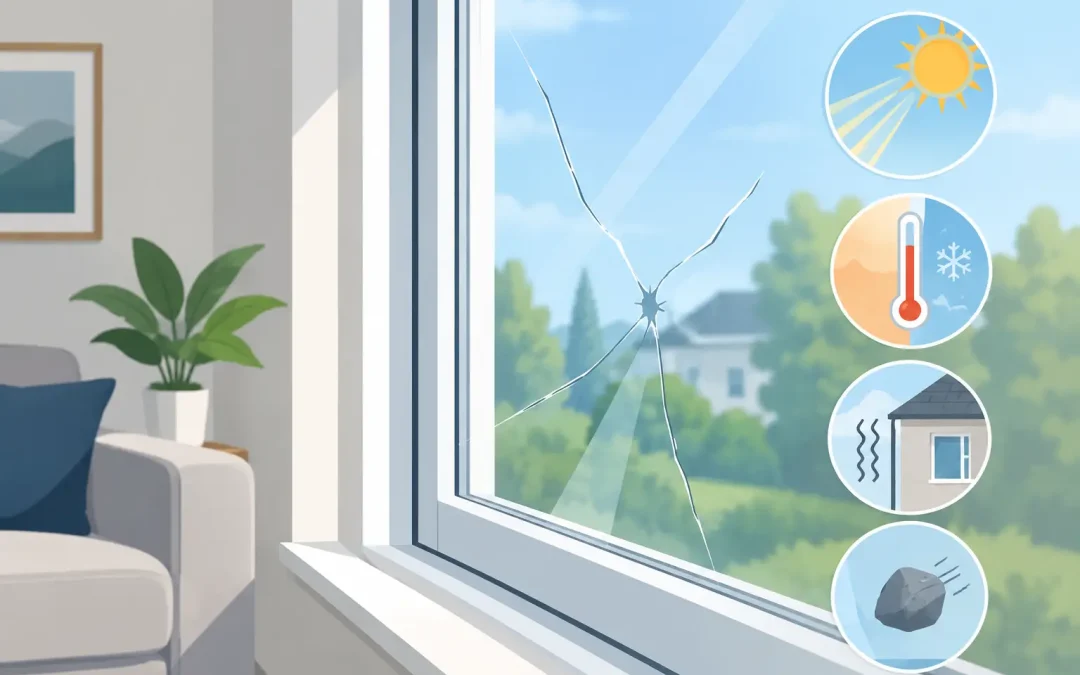
A crack that appears in a window without anyone throwing a ball or bumping the glass can be unsettling. If you are asking what causes window stress cracks, the short answer is pressure – usually from heat, a damaged edge, movement in the frame, or a combination of these. The crack may look small at first, but glass damage can spread quickly and should be checked before it becomes a safety or security problem.
Stress cracks are not always obvious when they begin. You might notice a fine line near the edge of the pane, then find it has travelled further after a hot afternoon, a cold night, or the next time the door is used. Knowing why it happened helps you arrange the right replacement and reduce the chance of the same issue returning.
What causes window stress cracks?
Glass is strong when it is properly supported, but it does not flex like timber or metal. When one area is pushed, squeezed, heated or cooled more than another, tension builds inside the pane. Once that tension exceeds what the glass can handle, it cracks.
A stress crack often starts at or near the edge of the glass and runs inward in a fairly clean line. That differs from an impact break, which commonly has a central point of damage and a spiderweb pattern around it. The distinction matters, although it is not always possible to confirm the cause just by looking. A qualified glazier can assess the break, the frame and the surrounding area before recommending replacement glass.
Rapid temperature changes
Thermal stress is one of the most common causes of cracks that seem to appear out of nowhere. Direct sun can heat one section of a window while another section remains shaded by an eave, blind, curtain or nearby building. The hotter part of the pane expands while the cooler part does not expand at the same rate. That difference places strain on the glass.
A sudden change can make matters worse. For example, a sun-heated window may be cooled quickly by rain, air conditioning, a cold hose, or a sharp evening temperature drop. Large panes, darker tinted glass and windows with partial shade can be more exposed to uneven heating. It does not mean every sunny window will crack, but it is a common factor worth considering when a crack has no clear impact mark.
Damage around the glass edge
The edges are the most vulnerable part of a glass pane. A tiny chip or nick may happen during installation, from a previous knock, or when the frame shifts slightly over time. It can be hidden behind glazing beads, seals or putty, so there may be no visible damage until the crack develops.
Once an edge has been weakened, ordinary daily stresses can be enough to start a fracture. Opening and closing a sliding door, vibration from nearby work, wind pressure or normal temperature changes may all add to the load. This is why a crack that looks sudden may actually have had a small underlying weakness for months.
A tight, damaged or moving frame
Glass needs the correct clearance inside its frame. If a pane is installed too tightly, or if packers and setting blocks are missing or have deteriorated, the glass can be pressed directly against the frame. Timber frames can swell or shrink with moisture, while aluminium and other materials expand and contract with temperature changes. Building movement can also affect how the frame supports the pane.
A sticking window or door is a useful clue. If it has become difficult to open, close or lock, the frame may be moving or distorted. Forcing it can put extra pressure on the glass. The right fix may involve more than replacing the pane – the frame, seals and support points may also need attention so the new glass is not under the same strain.
Building movement and settling
Homes and commercial buildings move a little over time. Seasonal conditions, ground movement, renovations, heavy traffic vibration and structural settling can all contribute. Most movement is minor and causes no trouble, but it can become an issue where a frame is already tight, ageing or poorly aligned.
Cracks linked to movement are more likely to reappear if only the glass is replaced without checking the opening. This is particularly relevant for large fixed windows, shopfront glass, older joinery and doors that are used constantly. A proper measure and inspection gives the installer a chance to identify whether the frame needs adjustment or repair before new glass goes in.
Previous impacts and everyday wear
Not all cracks happen at the exact moment of impact. A pane may have been lightly hit by furniture, a mower stone, a child’s toy, a slammed door or an object carried through a tight space. The initial mark can be small enough to miss, particularly if it is near an edge. Later, normal stress can extend the damage into a visible crack.
That does not mean someone has necessarily done something wrong. Glass is exposed to daily life, especially around busy family homes, rental properties, work sites and commercial entrances. What matters is dealing with the damage promptly before a small crack turns into a broken pane.
Can a window stress crack spread?
Yes. A crack in standard window glass should be treated as unstable, even if it has not changed for several days. Heat, cold, wind, door movement and vibration can all cause it to travel. It may also weaken the pane enough that a further small knock causes a larger break.
Cracked glass affects more than appearance. It can reduce weather protection, create sharp edges, make a property less secure and leave children or pets at risk. In a business, a damaged window or glass door can also be a security concern and give customers the wrong impression.
Toughened safety glass behaves differently. When it fails, it often breaks into many small pieces rather than forming one long crack. Laminated glass may remain held together by its internal interlayer after cracking. Both still need professional attention, as the glass has lost its integrity and the frame may need to be made safe.
What to do when you find a stress crack
Avoid pressing on the glass or trying to test whether the crack is loose. Do not tape across a crack as a permanent repair, and do not attempt to drill the end of the crack to stop it travelling. Those methods can create more stress, compromise safety and make replacement more difficult.
Keep people and pets clear of the area, particularly if the crack reaches an edge or the pane is in a door. If there are loose pieces, sharp fragments or an exposed opening, place a barrier around the area if you can do so safely. Take a photo for your records and, where relevant, for your insurer or property manager.
The next step is to arrange an assessment. A glazier can identify the glass type, measure the pane accurately and check whether the frame or installation is contributing to the problem. In most cases, cracked window glass is replaced rather than repaired. Replacement gives you a sound pane again and allows the supporting system to be corrected where needed.
How to reduce the risk of future stress cracks
You cannot prevent every glass crack, but a few practical habits can lower the risk. Avoid sudden temperature shocks, such as spraying cold water onto very hot glass. Take care when moving furniture, tools or sports equipment near windows and glass doors. If a window starts sticking or a door needs force to operate, have it looked at rather than pushing through the problem.
For renovations and replacement work, correct measuring and fitting are just as important as choosing the right glass. The pane needs suitable edge clearance and support, with compatible seals and packers to keep it secure without pinching it. For exposed locations, large panes or frequently used doors, a glazier can recommend glass suited to the job rather than simply replacing like for like.
A stress crack is rarely something to ignore and hope will stay put. Getting it assessed early protects the people using the space, keeps the weather out and gives you a clear answer on what needs fixing. Glass Direct can inspect the damage, replace the glass and leave the area clean and safe, so a worrying crack becomes one less thing on your list.