
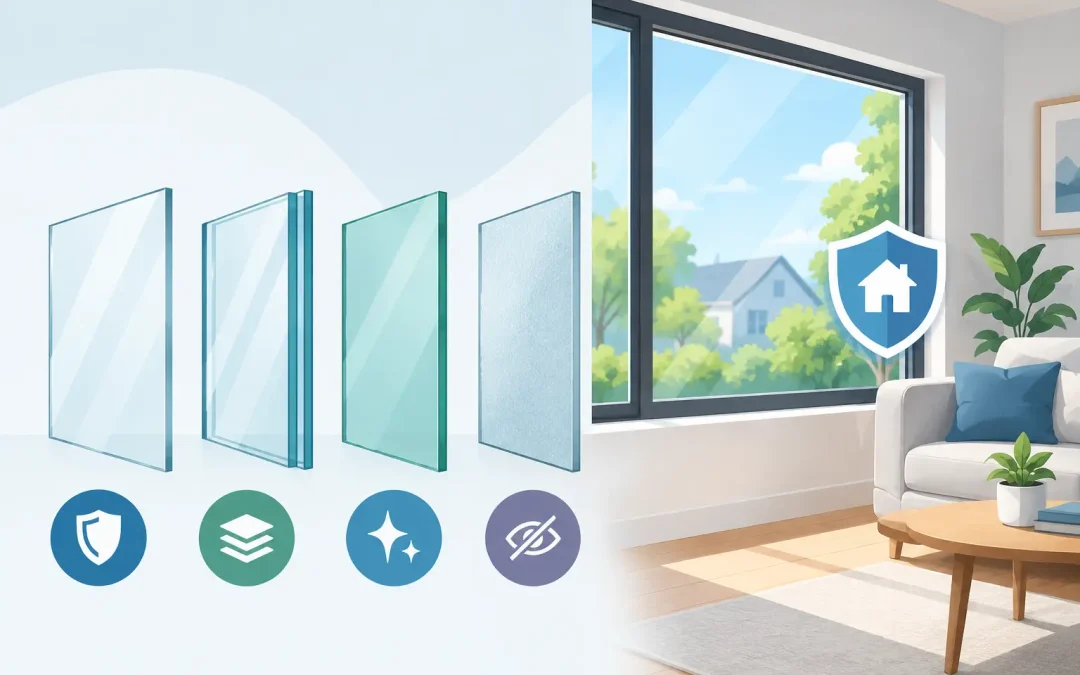
A broken window is an obvious safety issue. Less obvious is whether the glass that replaces it is suited to the spot. The different types of window safety glass are made to reduce the risk of injury, improve security, or hold together when damaged. The right choice depends on where the window is, who uses the space, and what the glass needs to do day after day.
For a family home, that might mean safer glass beside a ranch slider, in a bathroom, or near a low window where children play. For a shop, office or rental property, the priority may be reducing disruption after accidental damage or an attempted break-in. A qualified glazier can assess the opening and explain the practical options without making the job more complicated than it needs to be.
Why window safety glass matters
Ordinary glass can break into large, sharp pieces. Safety glass is designed to behave differently under impact. Depending on the type, it either breaks into smaller, less dangerous fragments or stays held together by an internal layer.
That difference matters around doors, walkways, baths and showers, stairwells, low-level glazing, and other areas where someone could fall against the glass. It can also matter in busy commercial premises, where a damaged pane can create an immediate hazard for staff and customers.
Safety glazing requirements can vary according to the window location, the building design and the work being carried out. Rather than guessing based on what was there before, have the glass assessed when replacing a cracked or smashed pane. Older properties in particular may have glass that would not be the first choice for that location now.
The main types of window safety glass
Toughened glass
Toughened glass, also called tempered glass, is heat-treated to make it much stronger than standard glass of the same thickness. When it breaks, it is designed to fragment into many small, blunt-edged pieces rather than dangerous shards.
It is a common choice for glass doors, sidelights, bathroom windows, shower screens, low windows and areas exposed to everyday knocks. It is also useful where a cleaner, frameless look is wanted, such as around modern entryways or interior partitions.
The main trade-off is that toughened glass cannot be cut, drilled or reshaped after the toughening process. Measurements and any holes for hardware need to be correct before it is made. Once broken, the whole pane needs replacing – it cannot be patched. That is why accurate measuring and proper installation matter.
Laminated safety glass
Laminated glass consists of two or more sheets of glass bonded together with a tough clear interlayer. If the pane cracks or breaks, that interlayer helps hold the pieces in place. The glass may look like a spiderweb after impact, but it is less likely to fall out immediately.
This makes laminated glass a strong option where containment is the priority. Think windows near footpaths, glazing above a doorway, skylights, balustrades, or panes where falling glass would be especially risky. It can also be useful for street-facing windows and doors where you want an added barrier after an impact.
Laminated glass can offer other benefits too. Depending on the make-up, it may reduce noise and filter a portion of UV light. It is not automatically the best security solution in every situation, though. The level of protection depends on the thickness, number of layers, framing and how the entire system is installed.
Heat-strengthened glass
Heat-strengthened glass is processed with heat, but not to the same level as toughened glass. It is stronger than ordinary annealed glass and can perform well where thermal stress is a concern, such as larger windows exposed to changing sun and shade.
When it breaks, however, it tends to form larger pieces than toughened glass. For that reason, it is not simply interchangeable with toughened safety glass. It is often used as part of a specific glazed unit or laminated glass build-up, rather than chosen as a general-purpose safety option for a door or low window.
For most homeowners replacing one damaged pane, the practical decision is usually between toughened and laminated glass. Heat-strengthened glass is more likely to be recommended where the window design, size or exposure calls for it.
Wired safety glass
Wired glass has a wire mesh embedded within it. Many people associate it with older commercial buildings, schools, factories and fire-rated doors. The wire can help retain pieces after breakage, but wired glass is not automatically suitable everywhere people may come into contact with it.
Modern glazing systems have moved on, and the right product depends on the fire requirements and safety needs of the exact opening. If you have an older wired-glass panel that is cracked, do not assume a like-for-like replacement is the only option. A glazier can check what is appropriate for the setting.
Safety glass versus security glass
Safety and security overlap, but they are not the same thing. Toughened glass is excellent at reducing injury risk from breakage, yet it can shatter completely after a sufficiently hard impact. Laminated glass is often better at keeping a broken pane together and delaying access through the opening.
If security is a concern, the answer may involve laminated glass, a heavier glass make-up, improved framing, better locks, or a combination of these. A strong pane in a weak frame will not solve every problem. For a shopfront, ground-floor office or home with an exposed entry, it pays to look at the whole opening rather than glass alone.
Where safety glass is commonly used
The location usually tells you more than the name of the glass. Glass in and around doors is a common area for safety glazing because people can walk into it or fall against it. The same applies to low windows, glazed partitions and large panels beside stairs or landings.
Bathrooms are another regular example. Windows near showers, baths and wet areas may need glass that is better suited to accidental contact and moisture-prone spaces. Shower screens generally use toughened glass, while a window next to a bath may need a different approach depending on its size, height and placement.
For landlords and property managers, damaged safety glass should be treated as more than a cosmetic repair. A cracked panel can worsen quickly, and loose fragments, sharp edges or an insecure opening create a risk for tenants. Fast temporary securing and a correctly specified replacement can prevent a small issue becoming a bigger call-out.
Choosing the right replacement after a breakage
When a pane breaks, the first job is to keep people away from the area. Keep children and pets clear, avoid touching loose pieces, and cover or secure the opening if it can be done safely. Do not lean a temporary board against unstable glass.
When arranging a repair, share a clear photo if possible and let the glazier know where the glass is located. Mention whether it is in a door, near the floor, in a bathroom, part of a double-glazed unit, or exposed to the street. These details help identify whether the replacement needs to be toughened, laminated, insulated, patterned, tinted or matched to existing glass.
Appearance still matters. Safety glass can often be supplied in clear, obscure or tinted options, and it may be incorporated into double glazing where thermal comfort is also a priority. The best result balances safety, privacy, energy performance and budget rather than focusing on one feature alone.
Get the glass assessed, not just replaced
It is tempting to replace broken glass with the cheapest matching pane and move on. But a breakage is a useful moment to check whether the original glass was right for the opening, especially in a family home, rental or public-facing business.
Glass Direct can measure the opening, explain the suitable options in plain language and fit the replacement neatly, with the broken glass cleaned up afterwards. The aim is simple: restore the window, make the area safe, and leave you with glass that suits the way the space is actually used.
If you are unsure which type is needed, do not rely on a quick visual guess. A proper assessment can turn an urgent repair into a safer, longer-lasting fix.