
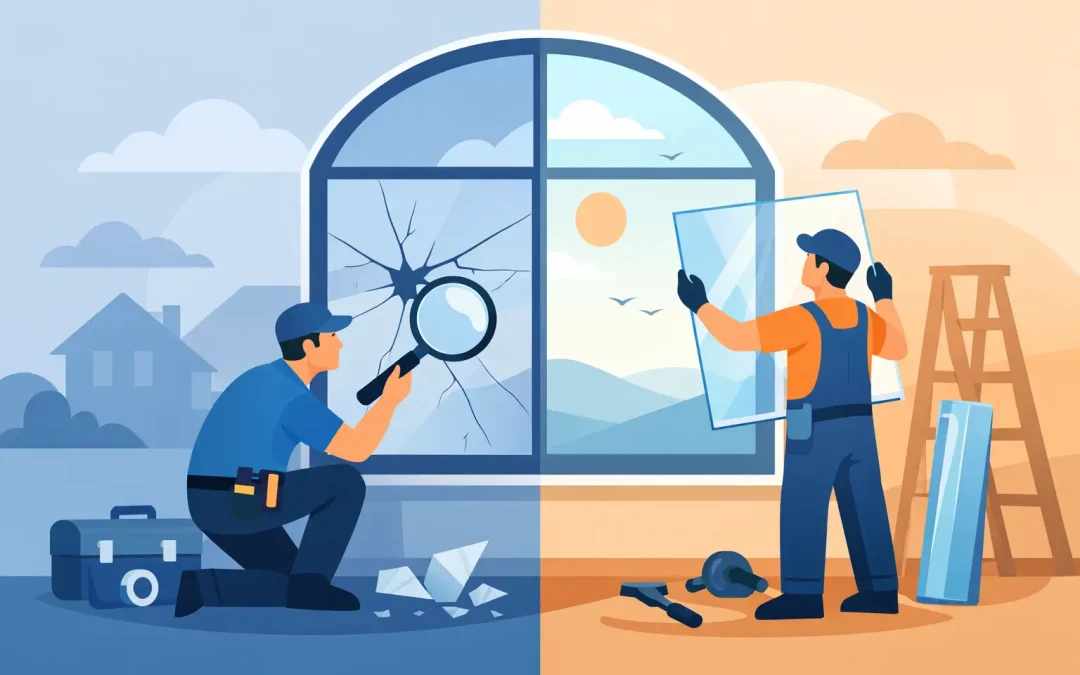
A cracked pane after a flying ball, a misty double-glazed unit, or a window that no longer shuts properly can leave you asking the same question: repair or replace window glass? The right answer is not always the cheapest option on the day. It comes down to safety, the type of damage, the age and condition of the window, and whether a repair will genuinely last.
For a small issue, a targeted repair may get things back to normal quickly. For major damage or an older, inefficient window, replacement can save repeat call-outs and give you a safer, better-performing result. Here is how to make a sensible call.
Start with safety, not cost
Broken glass is an immediate safety issue, particularly around children, pets, customers and busy walkways. If a pane is shattered, has loose pieces, or has a crack spreading towards the edge, keep people clear of the area. Do not try to push fragments back into place or tape over sharp, unstable glass.
If you can do so safely, move furniture and valuables away from the window and keep pets in another room. A temporary cover can help protect the opening from weather and unwanted access, but it is not a long-term fix. A qualified glazier can remove damaged glass safely, measure the opening accurately and advise on a suitable replacement.
For a shopfront, office, rental property or ground-floor home, security can make replacement more urgent. Even a small break can make a property easier to access and leave it exposed to rain, wind and further damage.
When window glass can usually be repaired
A repair is often worth considering when the damage is limited and the surrounding frame is still in good condition. The aim is to fix the problem properly without replacing materials that have plenty of life left.
Small chips and minor surface damage
A small chip or shallow scratch may not affect the structural strength of the pane, especially if it is away from the edge. In some cases, a glazier can assess whether the damage can be made safer or less noticeable. However, glass repairs have limits. A cosmetic repair will not restore a badly weakened pane to new condition.
Location matters here. A minor mark in a low-risk decorative pane is different from damage in a bathroom, door, large window or other area where safety glass may be required.
Loose putty, seals or beading
Older single-glazed windows can sometimes let in draughts or rattle because their putty, beading or seals have deteriorated. If the glass itself is sound and the frame is not rotten, warped or badly corroded, renewing these components may be all that is needed.
This is the type of job where an inspection pays off. What looks like a glass problem can occasionally be a frame or fitting issue instead.
A sound frame with one damaged pane
If one pane in a timber, aluminium or uPVC window has cracked but the frame operates well and matches the rest of the property, replacing only the glass is often the practical choice. It retains the existing window while restoring security and weather protection.
For many homes, this is the straightforward answer after an accident. You smash it, we fix it – without turning one broken pane into an unnecessary full-window project.
When replacing the glass is the better call
Some damage cannot be repaired safely, and some windows are telling you that a piecemeal fix will only delay a larger problem.
Cracks that run, spread or reach an edge
A crack is not just a visual issue. It weakens the pane, and changes in temperature, wind pressure, vibration or a closing door can cause it to spread. Cracks that reach the edge of the glass are especially concerning because the edges carry much of the pane’s stress.
Replacement is generally the safer option for cracked glass. Trying to seal a crack may stop dirt or moisture getting into it for a while, but it does not return the glass to its original strength.
Shattered or damaged safety glass
Toughened safety glass is designed to break into many small pieces, while laminated glass is designed to hold together with an interlayer. Both are valuable safety features, but either type needs professional attention once damaged.
A toughened pane cannot be repaired after it has broken. Laminated glass that remains held together may look less urgent, but it can still have compromised strength and exposed edges. It should be assessed promptly, especially in doors, sidelights, balustrades and areas close to foot traffic.
Condensation between double-glazed panes
Moisture or fogging between the panes of an insulated glass unit usually means the perimeter seal has failed. You may still be able to see through the glass, but the unit is no longer performing as intended. Heat loss, solar heat gain and outside noise can become more noticeable.
The frame may be perfectly serviceable, so replacing the glass unit rather than the entire window can be the sensible option. Accurate measuring is essential, as double-glazed units are custom made to suit the opening and system.
Repeated draughts, leaks and difficult operation
If water comes in during rain, cold air is noticeable around the frame, or the sash sticks and will not lock, the problem may go beyond the glass. Check for worn seals, blocked drainage paths, frame movement, deteriorated timber or corrosion.
Where several issues are present, replacing a single pane may not give you the result you expect. A glazier can explain whether the glass can be renewed on its own or whether a window specialist should assess the frame and hardware as well.
Repair or replace window glass: the cost question
The lowest upfront price is not always the best value. A small, isolated issue in a sound window usually suits repair or glass-only replacement. A pane with a spreading crack, failed double glazing or a damaged safety panel needs replacement because the risks of waiting are higher.
It is also worth considering the cost of disruption. A broken shop window can affect security and customer confidence. A damaged bedroom or living-room window can make a home uncomfortable, noisy or vulnerable to wet weather. Fast, correct work may prevent further damage to flooring, furnishings and frames.
If an insurance claim is involved, take clear photos before anything is removed, where safe to do so. Keep any relevant claim details handy and ask your insurer about its preferred process. An experienced glazing team can provide the measurements and job information needed to help the repair move along smoothly.
Match the replacement glass to the job
Replacement is not simply a matter of fitting any pane that looks similar. The right glass depends on where it is fitted and how the space is used.
A bathroom, glass door or low-level panel may require safety glass. A noisy street-facing room may benefit from a different glass configuration. A large window exposed to strong sun may call for glass that helps manage heat and glare. In some situations, matching the appearance of neighbouring panes matters just as much as performance.
For landlords and property managers, consistency is useful too. Choosing suitable, durable glass and having it installed properly can reduce repeat maintenance requests. For business owners, it can help keep premises secure and presentable with minimal interruption.
Do not overlook the frame and the finish
Even excellent glass will not perform well if it is fitted into a compromised opening. Before work begins, the frame should be checked for movement, rot, corrosion, failed seals and drainage issues. This avoids installing new glass into a problem that will shorten its lifespan.
The finish matters after installation as well. Clean removal of old glass, careful fitting, tidy sealing and proper clean-up make a real difference to the safety and appearance of the job. It is the reason many property owners prefer qualified glaziers over a quick DIY patch.
Glass Direct takes this practical approach across residential and commercial jobs: assess the damage, explain the workable options, measure accurately and leave the area clean once the work is done.
A simple way to decide
If the glass is shattered, cracked, loose, unsafe, fogged between panes or no longer secure, arrange a professional assessment and expect replacement to be likely. If the issue is limited to a small chip, loose beading or a minor seal problem in an otherwise sound window, repair may be enough.
When you are unsure, avoid making the decision based on appearance alone. A quick inspection can tell you whether the glass, the frame, or both need attention – and give you a clear path back to a safe, weatherproof window.