
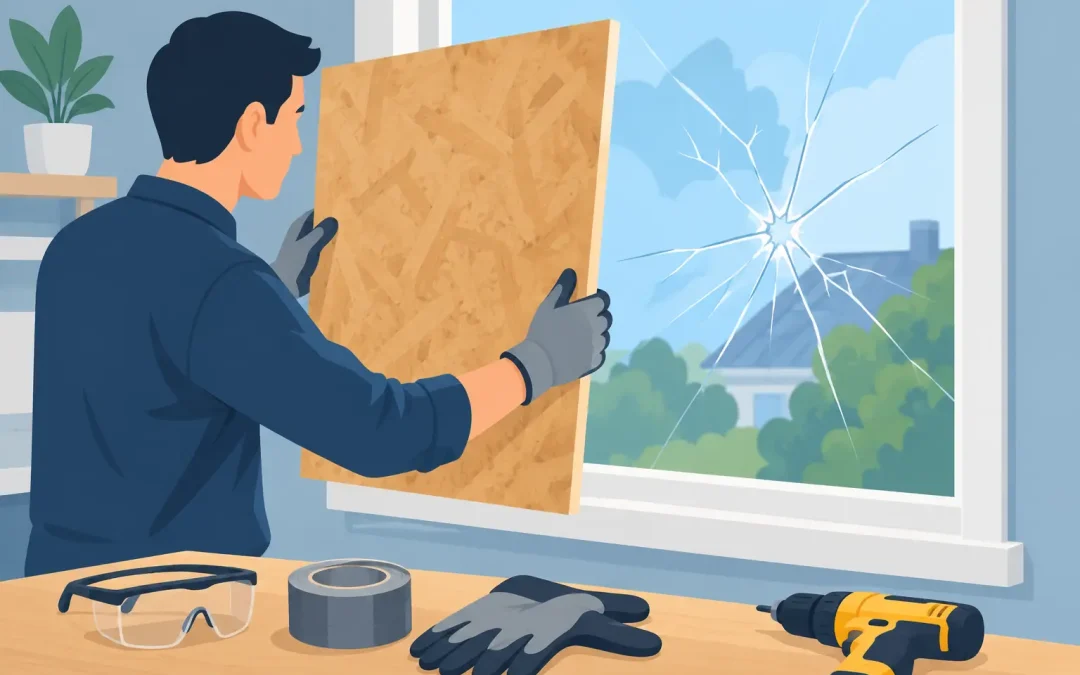
A crack in a window can look minor at breakfast and become a real safety or security issue by nightfall. Knowing how to secure cracked window glass straight away helps protect people, pets and property while you arrange the proper repair. The key is to keep everyone clear, stop the damage worsening where you can, and avoid turning a cracked pane into broken glass on the floor.
A crack will not repair itself. Changes in temperature, wind pressure, a slammed door or an accidental bump can cause it to spread quickly. If the glass is in a door, beside a walkway, near children, or on a ground-floor window, treat it as urgent.
First, make the area safe
Before reaching for tape or a sheet of plastic, keep people away from the damaged pane. Move children and pets into another room, and do not lean on, open or close the window. If there are loose fragments on the floor or sill, wear closed shoes and gloves before carefully collecting them. A brush and dustpan are safer than using your hands.
Do not press on the crack to see how serious it is. Even toughened safety glass can fail suddenly once damaged, breaking into many small pieces. Standard window glass can leave sharp shards. If the pane is bowed, rattling, badly fractured or already shedding pieces, stand clear and have it assessed by a qualified glazier as soon as possible.
For a cracked window near a door, stairwell, entrance or other busy area, block access with a chair, small table or another obvious barrier. The goal is simple: nobody should brush against the glass before it is made safe.
How to secure a cracked window temporarily
A temporary measure buys time. It does not make damaged glass safe to use or restore the strength of the pane. The right approach depends on whether the glass is cracked but intact, has a small hole, or is extensively broken.
If the glass is cracked but still in one piece
Clear packing tape can help hold a lightly cracked pane together until a glazier arrives. Apply strips gently across the crack on both sides of the glass if both sides are safely accessible. Start a little away from the crack and lay the tape on without pulling the glass or pressing hard.
Use several strips in a criss-cross pattern rather than one strip directly along the crack. This can reduce loose pieces if the glass gives way, but it will not stop the crack spreading or make the window secure against impact.
Avoid masking tape, which can lift in damp weather, and do not use tape as a reason to keep operating the window. Leave it shut and avoid vibrations nearby.
If there is a hole or missing glass
Keep your hands away from sharp edges. From inside the property, cover the opening with a sturdy temporary material such as a clean piece of cardboard, corrugated plastic or plywood. Secure the cover to the window frame where possible, rather than taping directly over jagged glass.
A plastic sheet can help keep rain and draughts out for a short period, but it is not a security barrier. If wind is expected, plastic can flap loose and place more stress on remaining glass. A rigid board is the better option for a larger opening, provided it can be fitted without touching or disturbing unstable glass.
If you are not confident fitting a cover safely, leave the area clear and call for professional help. There is no benefit in risking a cut to save a short-term call-out.
If the glass is shattered or unstable
Do not try to remove a pane that is still sitting in the frame. That work can involve sharp edges, hidden tension in the glass, and damaged glazing components that are not obvious from inside the room.
Instead, isolate the area and arrange urgent glazing assistance. A professional can remove broken glass safely, protect the opening and measure for the right replacement. This is particularly important for shopfronts, glass doors, bathroom glass and large panels, where incorrect handling can cause serious injury.
Protect the property while you wait
Once the immediate hazard is controlled, think about weather and security. Close curtains or blinds to give the damaged pane a little protection from accidental contact, but make sure the fabric cannot catch on broken edges. Keep furniture away from the window and avoid placing anything against the glass.
If the crack is allowing water in, place towels along the inside sill and move electronics, rugs and timber furniture out of the area. Check the surrounding wall and floor after rain, as water can travel further than expected. Do not seal drainage holes in aluminium window frames, as these are designed to let moisture escape.
For an accessible window, lock all other doors and windows as normal. A cracked pane can compromise security, especially if it is close to a latch or can be pushed in. If the opening cannot be securely covered, avoid leaving the property unattended until it has been made safe.
Commercial properties need the same practical approach. Keep customers and staff away from the area, put up a clear warning, and move displays or stock away from the glass. A damaged shop or office window can affect safety, security and presentation, so prompt action usually costs less disruption than waiting for the damage to worsen.
What not to do with cracked glass
A few common fixes create more trouble than they solve. Do not drill the end of the crack, apply superglue, use household sealant over the fracture, or try to heat the glass. These methods do not restore structural strength and may make a proper repair or replacement more difficult.
It is also best not to clean the cracked area with pressure, scrub at it, or spray very hot or cold water on the pane. Sudden temperature changes can spread a thermal crack. On a hot day, keep direct heat sources away from the glass where possible.
Avoid removing glazing beads, putty or rubber seals yourself. Once these are disturbed, the remaining pane may shift. What looks like a simple crack can involve a failed seal in a double-glazed unit, damage to the frame, or glass that is no longer compliant for its location.
When a cracked window needs professional repair
Every cracked pane deserves an assessment, but some situations should be treated as priority work. Arrange a qualified glazier promptly if the crack is growing, reaches an edge of the glass, affects a door or large panel, creates an opening, or involves safety glass. The same applies when glass is in a bathroom, balustrade, pool area or other place where the correct type of safety glass matters.
Double-glazed windows can be deceptive. A crack in one panel may leave the other intact, but the sealed unit has still been compromised. Condensation between panes, a draught, or a cloudy appearance can signal that replacement is needed rather than a simple temporary patch.
A glazier will identify the glass type, measure accurately and advise whether the best solution is replacing a single pane, a sealed unit or the complete panel. For landlords and property managers, clear photos of the damage and the surrounding frame can also help with maintenance records and insurance discussions before work is booked.
Glass Direct works with Auckland homes and businesses to make damaged glass safe, provide clear options and leave the area tidy once the job is done. Whether the problem is one cracked bedroom window or a broken commercial panel, proper glazing work restores more than the view. It restores the safety and confidence to use the space normally again.
A temporary cover is there to protect you for the moment, not to become a long-term repair. Keep the pane untouched, keep the area clear, and get the cracked glass assessed before the next gust of wind, cold snap or everyday knock turns a manageable problem into a mess.