
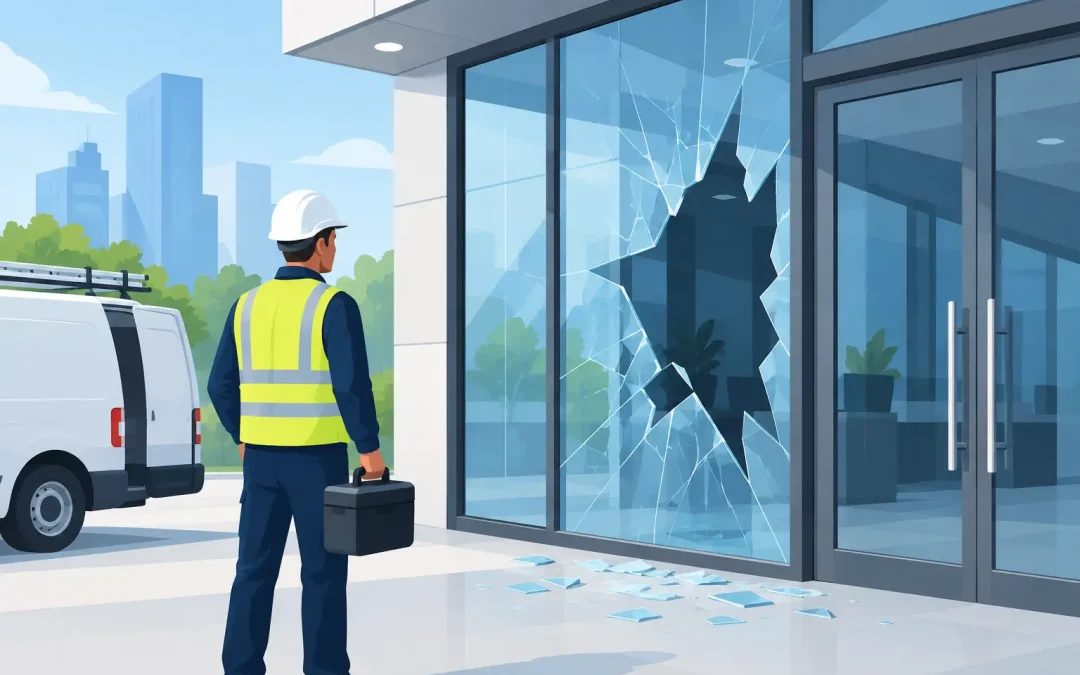
A smashed shopfront at 7 am can turn a normal trading day into a safety and security problem within minutes. This guide to commercial glass emergencies explains what Auckland business owners, tenants and property managers should do first, what can wait, and how to get the right repair underway without adding to the disruption.
Broken commercial glass is rarely just a cosmetic issue. It can leave sharp fragments near customers, expose stock and equipment, let rain into the premises, and make it difficult to open safely. The right response is calm, practical and quick: protect people, secure the opening, document the damage, then arrange a professional assessment.
What counts as a commercial glass emergency?
A commercial glass emergency is any damage that creates an immediate risk to people, security or the operation of your premises. A completely shattered front window is the obvious example, but a large crack in a door panel, loose glass overhead, or a broken glazed partition can be just as urgent.
The priority depends on where the glass is and how it has failed. A cracked internal office pane may be able to be isolated until a scheduled repair. A broken entry door, ground-floor window or street-facing shopfront usually needs attention straight away because it affects security and public safety.
Toughened safety glass often breaks into small, cube-like pieces rather than large sharp shards. That reduces the risk of serious cuts, but it still leaves a dangerous mess and an open gap. Laminated glass may remain in place after impact because the interlayer holds the broken pieces together. It can look less dramatic, but damaged laminated glass should still be inspected before people continue using the area.
First steps during a commercial glass emergency
Do not rush straight towards the broken panel. Take a moment to look for loose glass, damaged frames, fallen signs or a cause that may still be unsafe, such as a vehicle impact or attempted break-in.
If there is an immediate threat to life, fire, serious structural damage or criminal activity in progress, contact emergency services first. For most broken-window situations, your on-site response should focus on keeping people clear and preventing further damage.
The following actions are worth taking before a glazier arrives:
- Keep staff, customers, visitors and pets away from the area. Use cones, chairs, temporary barriers or clear signage to create a safe exclusion zone.
- Wear suitable closed footwear and gloves if you need to move small fragments from an immediate walkway. Do not handle large pieces, glass still in the frame, or unstable panels.
- Avoid sweeping broken glass into public drains or garden beds. Collect only what is safely accessible and place it in a sturdy, clearly marked container.
- If safe to do so, take clear photos of the glass, frame, surrounding area and any suspected cause of damage. These can help with insurance and with ordering the correct replacement.
- Protect stock, computers and furnishings from weather. Move items away from the opening or cover them without leaning anything against damaged glass.
Do not tape over a cracked pane and assume it is safe. Tape can help contain very minor cracking in limited circumstances, but it is not a repair and will not make a failing panel secure. Likewise, avoid using plywood, cardboard or plastic sheeting unless it can be installed without touching broken glass or damaging the frame. A temporary board-up is often the sensible option when replacement glass cannot be fitted immediately.
Secure the premises, then plan the repair
For a customer-facing business, the first question is often whether you can stay open. It depends on the location of the damage, whether the entrance can be safely controlled, and whether your insurer or building manager has any specific requirements.
A broken rear window in a stockroom may allow the front of the business to operate while the opening is secured. A damaged glass entry door or shattered full-height shopfront is different. If customers would need to walk near loose glass, exposed edges or an unsecured opening, closing or restricting access is usually the safer call.
A qualified commercial glazier can assess the frame, measure the opening and advise whether a temporary security solution is needed before the final replacement. This matters because many commercial panes are not standard sizes. Shopfronts, office partitions, doors, display windows and balustrades may need glass cut to specific dimensions and safety requirements.
The fastest-looking solution is not always the best one. Replacing a safety-glass panel with unsuitable glass may create compliance and safety problems later. If the frame is bent, loose or damaged by impact, fitting new glass alone may not solve the issue. A proper assessment prevents a repeat call-out and gives you a clearer picture of the work required.
Information a glazier will need
When you call, explain where the glass is located and whether the area is exposed or unsecured. Mention if it is an external shopfront, a glass door, an internal partition, a window near a footpath, or glass close to stock or public areas.
Photos are helpful where they can be taken safely. They can show the approximate size, type of frame, extent of damage and whether there are remaining fragments in place. If you know the glass type – for example, toughened, laminated, double glazed or wired glass – pass that on, but do not worry if you do not. An experienced glazier can identify what is needed on site.
It also helps to tell the glazier about access. Let them know if there are loading restrictions, upper-level access, building-security procedures, after-hours requirements or a busy trading period to work around. For property managers, confirm who can approve the work and who should receive updates. A small amount of detail at the start can prevent avoidable delays.
Insurance, landlords and incident records
After people are safe and the property is secure, notify the appropriate parties. For tenants, that may be the landlord or property manager. For owners, it may be your insurer. If vandalism, a break-in or vehicle impact caused the damage, report the incident to the police as required and keep the reference number.
Take notes while the details are fresh. Record the date and time, who discovered the damage, what was affected, whether the business had to close, and what temporary measures were taken. Keep copies of photos, invoices and repair correspondence. Insurers commonly need evidence of the damage and confirmation that reasonable steps were taken to prevent further loss.
Do not delay securing a broken opening while waiting for an insurance decision. Most insurers expect you to mitigate further damage where possible. Your policy may have preferred supplier arrangements or an excess to consider, but protecting the site, staff and stock should come first.
Reducing the risk of another breakage
Not every glass emergency can be prevented. Accidents happen, storms throw debris, and vandalism is unpredictable. Still, recurring damage is a reason to review the glass and the surrounding area rather than simply replacing like for like.
For street-facing premises, laminated safety glass can offer an added layer of security because it tends to remain held together after impact. This may reduce the size of an opening and help protect the premises until repairs are arranged. It is not invincible, and it may cost more than a basic replacement, but the extra protection can be worthwhile in higher-risk locations.
Door closers and hinges should also be checked if glass doors are slamming, catching or being forced out of alignment. A repeated crack near a corner or fixing point may indicate a door or frame issue, not bad luck. In warehouses and service areas, bollards, clear traffic routes and visibility markings can reduce the chance of trolley, forklift or vehicle strikes.
For businesses that rely heavily on their frontage, it is worth keeping the contact details of a trusted glazing company with your emergency contacts. Glass Direct provides commercial glass repair and replacement across Auckland, with qualified glaziers who can assess the damage, help secure the area and organise the right replacement.
A broken window can feel like a major setback, especially when it happens before opening time or after a break-in. But a clear plan keeps the problem manageable: keep people away, secure the site, record the damage and get an experienced glazier involved early. The sooner the opening is safe, the sooner your business can get back to normal.