
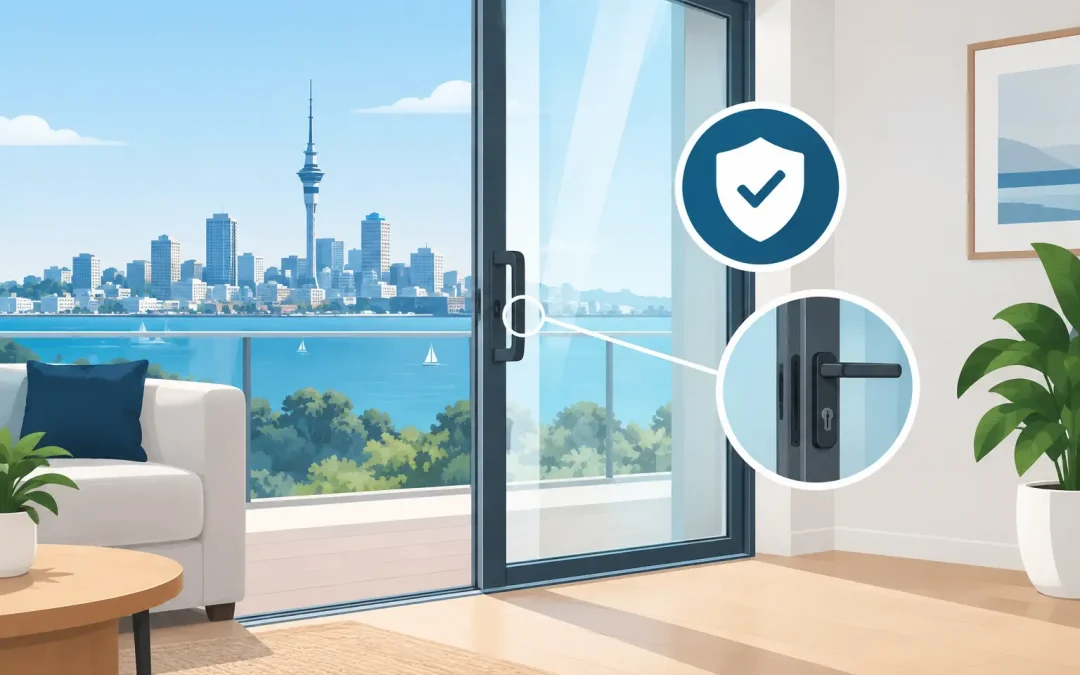
A glass door brings light, views and easy access to the deck, garden or shopfront. It can also become a real hazard when a panel is cracked, poorly fitted or hard to see. This glass door safety guide covers the practical checks that help protect children, pets, visitors and staff, plus what to do when glass is damaged.
Start with the glass itself
Not every pane of glass is suitable for a door. Doors, sidelights and low-level glazing are exposed to bumps, slamming, furniture moves and everyday foot traffic. In areas where people could fall against the glass, safety glass is generally required. It is designed to reduce the risk of serious injury if it breaks.
Toughened glass breaks into many small, blunt-edged pieces. Laminated safety glass is made from layers with an interlayer that helps hold broken pieces in place. Both have useful applications, but the right choice depends on the door, its location, frame and how the space is used.
Look for a permanent safety-glass marking, often a small etched stamp in a corner of the pane. If there is no visible marking, do not assume the glass is unsafe, but do have it checked if it is in a high-risk area. Older homes, renovated properties and replacement panels do not always have the same glazing history.
A qualified glazier can assess whether the existing panel is appropriate and measure for a compliant replacement if it is not. This matters especially around entry doors, sliding doors, bathrooms, pool areas and full-height glass beside a doorway.
Glass door safety guide: checks that take minutes
You do not need to dismantle a door to spot common safety issues. Make a habit of looking over glass doors after a storm, a hard knock, furniture being moved or a busy weekend with children and pets coming and going.
Start with cracks and chips. A small chip near an edge can weaken a pane more than it appears to. A crack that spreads, branches or reaches the frame needs prompt attention. Do not keep using the door normally while you wait for advice, particularly if it is a sliding panel or a door that closes with force.
Next, check the frame, tracks and hinges. Sliding doors should move freely without scraping, jumping or needing a hard shove. Hinged doors should close securely without sagging or catching. Loose hardware can place uneven pressure on the glass, and a worn roller or misaligned track can turn a minor issue into a broken panel.
Also look at visibility. Large, clean glass panels can be difficult to notice, particularly for young children, older visitors and people entering an unfamiliar building. Decals, frosted bands or clear safety markers at a noticeable height make the door easier to see without blocking natural light.
Finally, pay attention to the space around the door. Heavy pots, outdoor furniture, toys and hard-edged tables should not sit where a door can swing into them or where someone may fall against a pane. A doorstop can help prevent a hinged glass door from hitting a wall or cabinet.
Make everyday use safer for children and pets
Glass doors often sit at the busiest point in the home. That makes a few small routines more useful than a long list of rules.
Teach children not to push, lean or bang on glass, even when it looks thick. Avoid attaching climbing toys, pull-up bars or suction items that encourage weight against a panel. When children are playing indoors, move balls and rough games away from glass doors and low-level windows.
For sliding doors, keep tracks clear of sand, stones and small toys. Grit can affect how the panel runs and may cause people to force it open. Clean the track regularly with a vacuum and a soft brush, then wipe it dry. If the door remains stiff, do not keep muscling it along. The cause could be a roller, track or frame issue that needs repair.
Pets need consideration too. Dogs can run at a closed glass door when excited, while cats may scratch at a pane or try to squeeze through a partly open slider. Visible markers help, and a properly installed pet flap in a suitable glass panel can be safer than repeatedly leaving a door ajar. Pet flaps should be fitted to the correct panel rather than cut into glass that is not suitable for alteration.
Do not ignore condensation, movement or rattling
A broken pane is obvious. Other warning signs are quieter but still worth acting on. Rattling glass, a loose bead around the frame, moisture between double-glazed panes or a door that suddenly becomes difficult to lock can point to a problem.
Condensation on the room side of glass may simply reflect indoor humidity. Moisture trapped between panes of double glazing, however, can indicate a failed sealed unit. It is not usually an emergency, but the glass may no longer perform as intended and should be assessed.
Movement in the frame is more urgent. If the glass shifts when the door is opened or closed, if there is a visible gap at an edge, or if a panel rattles in strong wind, avoid using the door until a glazier has inspected it. A temporary tape job may stop a draft, but it will not secure loose glass.
What to do after a glass door breaks
A smashed glass door creates two problems at once: sharp glass and an unsecured opening. Keep people and pets well away from the area. If possible, close off the room or block access with furniture placed well back from the broken pane.
Wear enclosed shoes and sturdy gloves before going near the damage. Do not use bare hands to pick up fragments, and do not allow children to help with clean-up. Large pieces can be unstable, while tiny shards often spread further than expected across flooring, rugs and nearby furniture.
If there are loose pieces still in the frame, leave them in place unless they are immediately falling out. Trying to remove a damaged panel without the right equipment can cause more breakage and injury. Cover the opening only if it can be done without handling unstable glass, and keep the area dry and secure until repairs are arranged.
For a home, that may mean using another entrance and keeping curtains closed for privacy. For a business, it may mean restricting the affected area, protecting stock and considering temporary security straight away. Take photos for your records or insurance claim once everyone is safe, but do not delay arranging help for the sake of documentation.
When repair is possible and when replacement is safer
Some minor surface scratches can be assessed for repair, but chips, edge damage and cracks in door glass usually call for replacement. Glass doors operate under movement and impact, so a compromised panel is not something to patch and forget.
The solution can depend on the type of glass, the size of the pane and the door system. A glazier may recommend replacing only the damaged panel, replacing a sealed double-glazed unit, adjusting hardware, or changing the glass specification to improve safety. The useful question is not simply, “Can this be fixed?” It is, “Will this door be safe and reliable once the job is done?”
For Auckland homeowners, landlords and businesses, Glass Direct can assess damaged door glass, take accurate measurements and organise a practical replacement without making the process harder than it needs to be. Clear advice upfront helps you choose a fix that suits the door and the people using it.
A glass door should feel like part of the home or workplace, not something everyone has to tiptoe around. If a pane is cracked, loose, hard to operate or simply not right for its location, arranging an inspection early is the simplest way to keep a small concern from becoming an injury or a bigger repair.