
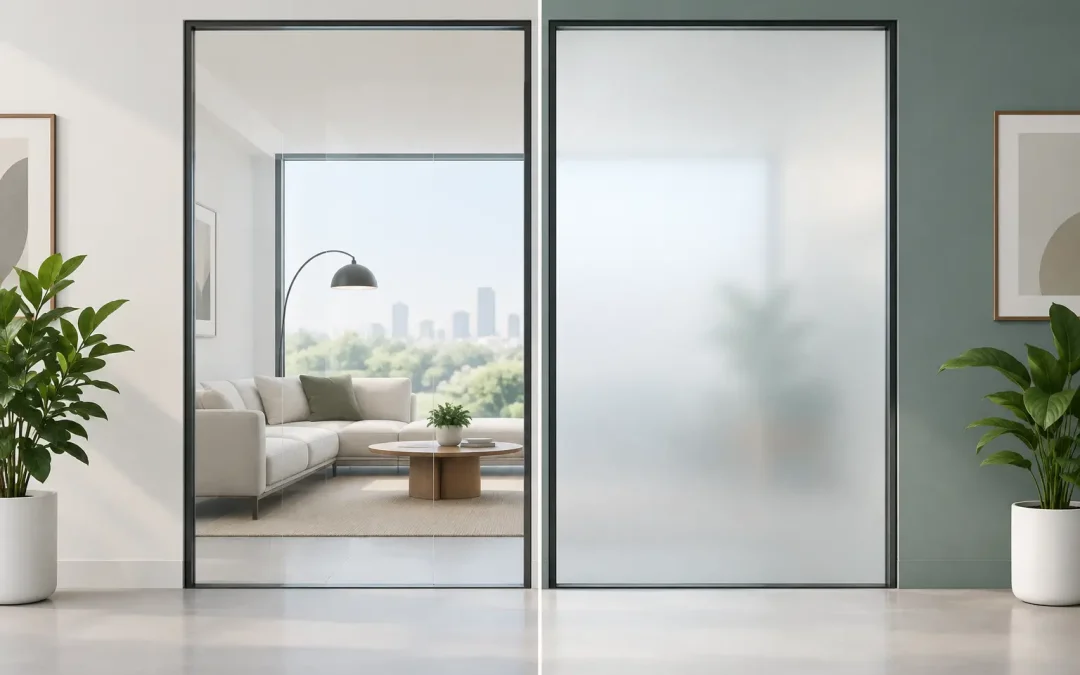
A bathroom that feels exposed, a front door that puts the hallway on display, or an office meeting room with nowhere private to talk – these are the moments when the choice between clear versus frosted glass matters. Both can brighten a space and make it feel more open than a solid wall. The right one comes down to what you need that glass to do every day.
Clear glass is the familiar choice when you want an uninterrupted view and maximum daylight. Frosted glass lets light through too, but softens or blocks the view. Neither is automatically better. A good glazing choice considers privacy, location, cleaning, safety requirements and how the room is used.
Clear versus frosted glass at a glance
Clear glass keeps sightlines open. It is well suited to windows with a pleasant outlook, internal partitions where supervision matters, shopfronts and glass tabletops. It also gives rooms a crisp, spacious look because there is no visual barrier between one area and the next.
Frosted glass gives you light without the same level of visibility. Depending on the finish and pattern, it can blur shapes or obscure them almost completely. That makes it a practical option for bathrooms, toilets, shower screens, entrance sidelights and meeting rooms.
The key difference is simple: clear glass prioritises visibility, while frosted glass prioritises privacy. Both still need to be selected in the right thickness and safety grade for the job.
When clear glass is the practical choice
Clear glass works best where the view is part of the value. A large lounge window looking onto the garden, a café frontage, a balcony barrier or a display cabinet all benefit from a clean, open finish. It allows the most direct natural light into a room, which can make a narrow Auckland home or darker commercial space feel less enclosed.
It is also useful where people need to see through a barrier. In an office, clear glazed partitions can help a workplace feel connected while still reducing noise between rooms. In a family home, clear glass can make it easier to keep an eye on children playing in another area.
For tabletops, clear glass is often chosen because it protects the surface underneath without hiding timber, stone or a favourite piece of furniture. If the top is used heavily, ask about toughened safety glass and edge finishing. The glass should suit the table, not just look good on it.
Clear glass does have a privacy trade-off. A clear bathroom window may bring in plenty of sun, but it can leave occupants feeling on show. A clear front door panel can make an entrance welcoming during the day while revealing too much at night when the indoor lights are on. Curtains, blinds or landscaping can help, but sometimes frosted glass is the simpler, permanent answer.
Where frosted glass earns its place
Frosted glass is a popular fix for rooms that need daylight but not direct views. Bathrooms are the obvious example. A frosted window can keep the room bright and airy without relying on a closed blind every time someone uses it. It is especially handy in homes where bathroom windows face a neighbouring property or a busy path.
Shower glass is another common use. Clear shower screens make a compact bathroom feel larger, but frosted or partially frosted glass can offer more privacy in a shared household. A band of frosting through the middle of an otherwise clear panel is a practical middle ground. It keeps the room open while covering the area where privacy matters most.
At an entry, frosted glass can bring natural light into a dark hallway without giving passers-by a direct view inside. For commercial spaces, it can make meeting rooms and consultation areas more private while still borrowing light from surrounding windows.
Frosted glass is not always completely opaque. You may still see movement, outlines or changes in light on the other side, particularly at close range. If you need full privacy, explain that clearly when discussing the job. The finish, design and lighting conditions all affect how much can be seen through the glass.
Frosted finishes are not all the same
“Frosted” describes the look, not one single product. Some glass is manufactured with a permanently etched or textured surface. Other panels have a decorative film applied to clear glass. Patterned glass can offer privacy too, often with a different texture and level of distortion.
A film can be a sensible short-term or budget-conscious option for an existing clear pane, especially if the glass itself is sound. It can also be useful for testing whether more privacy works in a particular room. However, a quality frosted glass replacement is usually the better long-term choice where durability, a clean edge finish and a purpose-made result matter.
For shower areas and wet rooms, choose a solution designed for moisture and regular cleaning. A qualified glazier can assess the existing panel, its safety requirements and whether replacement is the most sensible option.
Light, privacy and the effect on your room
Many people assume frosted glass makes a room dark. In most situations, it does not. It diffuses daylight rather than stopping it, spreading a softer glow through the room. This can reduce glare and soften harsh sunlight, which is useful near a desk, beside a bed or in a bathroom that gets strong afternoon sun.
Clear glass produces sharper light and a more direct connection to the outdoors. That can be ideal in living areas, but it may create glare on screens or make a room uncomfortably warm if the window faces strong sun. Frosting alone is not a heat-control solution. If heat, UV exposure or energy efficiency is the issue, the glazing specification may need attention as well.
Consider the view from both sides of the pane. Frosting a window may solve privacy for the person indoors, but it also removes the outward view. In a room with only one window, that can make the space feel more closed off. Partial frosting, a patterned design or a frosted lower section can preserve some of the view while screening the most sensitive areas.
Cleaning and day-to-day upkeep
Clear glass shows water spots, fingerprints and dust quickly, particularly in showers, on doors and around children or pets. The upside is that it is straightforward to see where cleaning is needed. A soft cloth, clean water and a suitable glass cleaner will usually keep it looking tidy.
Frosted glass can hide fingerprints and smudges better from a distance, but its textured surface may hold onto grime if it is not cleaned regularly. Avoid rough scourers that can mark the surface. Use a soft cloth and follow any care advice provided for the particular finish. In showers, regular wiping after use helps reduce soap residue and mineral marks on both clear and frosted panels.
If appearance needs to stay consistent across several rooms or a commercial fit-out, think about maintenance before choosing. A finish that looks great in a showroom should also suit the people who will clean it every week.
Safety comes before appearance
Whether glass is clear or frosted does not determine whether it is safe glass. Locations such as doors, shower screens, low-level windows, balustrades and glass near walkways may require safety glass under building rules. Toughened or laminated glass may be needed, depending on the location and application.
This is why replacing a broken panel is not always a like-for-like visual decision. An older pane may not meet the requirements that apply to a new replacement. Measurements, glass type, fixing method and the surrounding frame all need checking before the new glass is cut.
For landlords and business owners, this is particularly worth getting right. A quick-looking fix that does not suit the location can create a bigger problem later. An experienced glazier will explain the practical options in plain language and recommend the appropriate glass for the job.
Choosing for common Auckland spaces
For a bathroom window, frosted safety glass is often the practical favourite because it brings in daylight while protecting privacy. For a shower screen, clear glass suits a spacious, open look, while frosted or partially frosted panels suit shared bathrooms and closer neighbours.
For a front door sidelight, frosted glass is usually the safer privacy choice, especially where the entry opens straight into a living area. For a living room window with a good garden outlook, clear glass generally makes more sense. In offices, clear partitions support visibility and light, while frosted bands or full frosting help separate confidential spaces.
A replacement panel, a custom shower screen or a new glass tabletop should fit the way the space is actually used. Glass Direct can measure the opening, talk through the finish and safety options, and make sure the completed job is neat and properly fitted.
The best glass is the one you do not have to think about once it is installed. It should give you the light you want, the privacy you need and a finish that makes everyday life a little easier.