
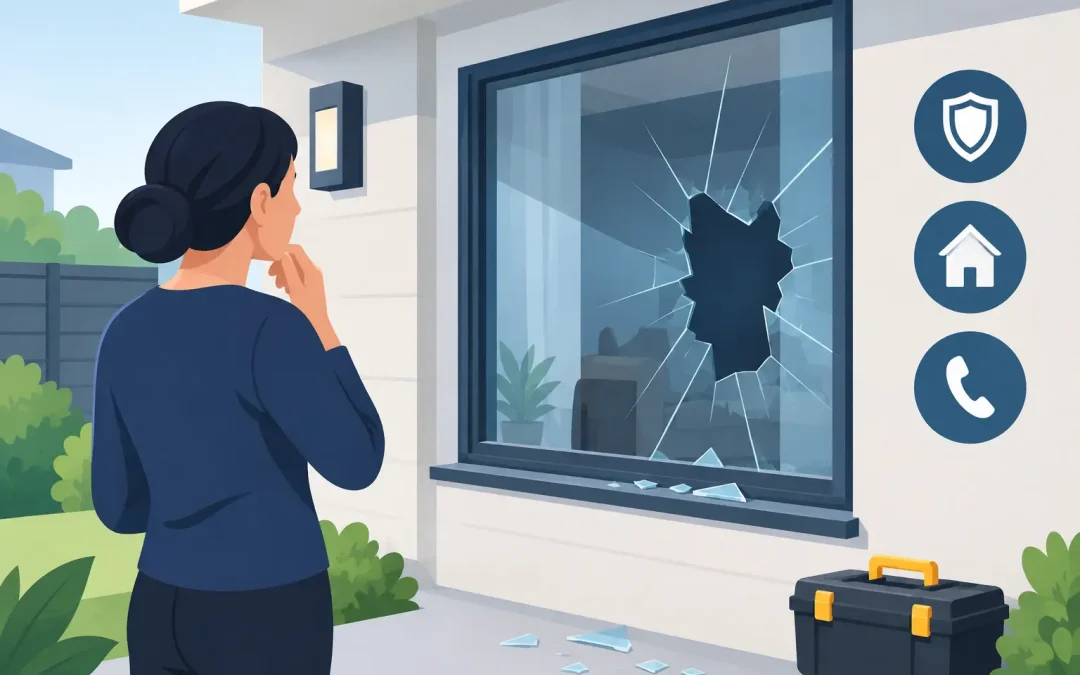
A smashed window changes the feel of a property straight away. There may be sharp glass on the floor, wind and rain getting inside, and an opening that makes your home or business easier to enter. Broken window security is about dealing with all three quickly: protect people first, secure the opening next, then arrange the right repair.
Whether a ball has come through a lounge window, a shopfront has been damaged overnight or a crack has suddenly spread across a glass door, a calm first response makes a real difference. You do not need to diagnose the glass yourself. You do need to make the area safe and avoid turning a repairable problem into a larger one.
Make the area safe before anything else
Keep children, pets, customers and staff away from the broken pane. If the glass is in a doorway, place something visible across the entrance so nobody walks through it by habit. Do not lean on a damaged window or try to push loose shards back into place. Glass can remain under tension, particularly in doors, larger panels and toughened safety glass.
Put on enclosed shoes and sturdy gloves before picking up any pieces you can safely reach. Larger fragments are easier to collect with care, but small splinters can travel further than expected. Use a brush and dustpan rather than your hands, then vacuum the surrounding floor, skirting boards and nearby furniture. Check both sides of the window if the break has gone through a door or external wall.
If there are shards still held in the frame, leave them there unless they are at immediate risk of falling onto someone. Removing glass from a frame can cause the remaining section to collapse. A qualified glazier has the right tools and knows how to remove it safely.
Broken window security: close the gap safely
Once people are clear of the area, the immediate job is to limit access and weather exposure. Close and lock any nearby doors or windows. Move valuables away from the opening, especially if it faces a street, shared driveway or public footpath. For a business, take portable stock, tills and sensitive equipment out of sight where practical.
A temporary cover can help while you wait for a glazier, but it needs to be fitted carefully. A solid board fixed from the inside is generally more secure than plastic sheeting. Plastic can keep out a light shower and reduce draughts, but it is not a security barrier and can flap loose in the wind. Never leave sharp edges exposed around a temporary cover.
It is also worth thinking about the time of day and location. A small break in an upper-level bathroom window may be more protected than a shattered ground-floor sliding door at the rear of a property. If the opening cannot be made secure, avoid leaving the premises unattended. For commercial sites, a manager may need to arrange staff cover or move operations away from the affected area until it is safe.
If you believe someone has deliberately damaged the property or entered it, do not disturb the scene more than necessary. Contact the police first and take clear photos from a safe distance for your records, insurer or property manager.
Work out what has actually been damaged
Not every damaged pane looks the same, and that affects the repair. A clean break in a standard window pane is different from a cracked double-glazed unit, a shattered safety-glass door or a damaged shopfront. The frame, seals, locks and surrounding joinery also need checking.
A crack may seem minor, but it can spread after a change in temperature, a slammed door or strong wind. Moisture can get into the edge of an insulated glass unit, causing fogging between the panes. In a sliding door, even a small glass fault can affect how the door operates and whether it locks properly.
When booking a repair, explain where the glass is, roughly how large the panel is and whether it is fully broken, cracked or missing. Photos can help a glazier prepare for the job, particularly for unusual shapes, patterned glass, mirrors, shower panels or older aluminium and timber frames. A site measure is still the best way to confirm the correct fit.
Repairing the glass is also a chance to improve security
A replacement does not always have to be like-for-like. In some locations, changing the glass type can make better sense. Safety glass is commonly used where people are more likely to fall against it, such as doors, sidelights and low-level glazing. When it breaks, toughened glass is designed to crumble into small pieces rather than large sharp shards. Laminated glass holds together with an interlayer, which can help keep a pane in place after impact.
The best option depends on the opening and how the property is used. Laminated glass may offer extra resistance for an exposed entry or ground-floor window, while toughened glass is often suited to doors and other high-contact areas. Double glazing can improve comfort and reduce outside noise, but it is not automatically the strongest security choice. The frame condition, locking hardware and quality of installation all matter as well.
For landlords and property managers, a sensible repair should balance tenant safety, cost, durability and turnaround time. Replacing a broken pane with unsuitable glass simply creates another call-out later. For homeowners, it can be worth discussing whether a vulnerable window should be upgraded while the work is already being done.
Do not overlook locks, frames and tracks
Glass is only one part of the opening. After an impact, check whether the lock still engages, the frame has shifted or the track on a sliding window or door has been damaged. A new pane in a bent frame may not sit correctly, and a door that no longer locks is still a security issue even when the glass has been replaced.
Tell your glazier if the break happened near a latch, handle or pet flap. Existing pet flaps and cut-outs need accurate measurement, and damaged door glass may need to be replaced with a panel made for that purpose. The same applies to glass around entry doors, where visibility, ventilation and security all need to work together.
For a shopfront or office, inspect alarms, roller shutters and access controls too. A cracked panel might be the visible damage, but a forced entry can affect more than the glazing. Record what you find before trades begin, especially if an insurance claim is likely.
Keep the repair moving without adding stress
Take a few photos after making the area safe. Note the date, likely cause and any damage to frames, furniture or stock. If you rent, notify the landlord or property manager promptly and follow the agreed process for urgent repairs. Business owners should also let their insurer know if the damage affects security or trading.
Then arrange a professional measure and repair. Glass Direct has qualified glaziers who can assess broken windows, doors, mirrors and other household or commercial glass, explain the practical options and leave the site clean once the job is done. The aim is not just to fill a hole in the wall. It is to restore a safe, properly fitted barrier that you can rely on.
A broken window is disruptive, but it does not need to leave your property exposed for longer than necessary. Clear the danger, secure the opening as safely as you can, and get the right person on site to put things right.