
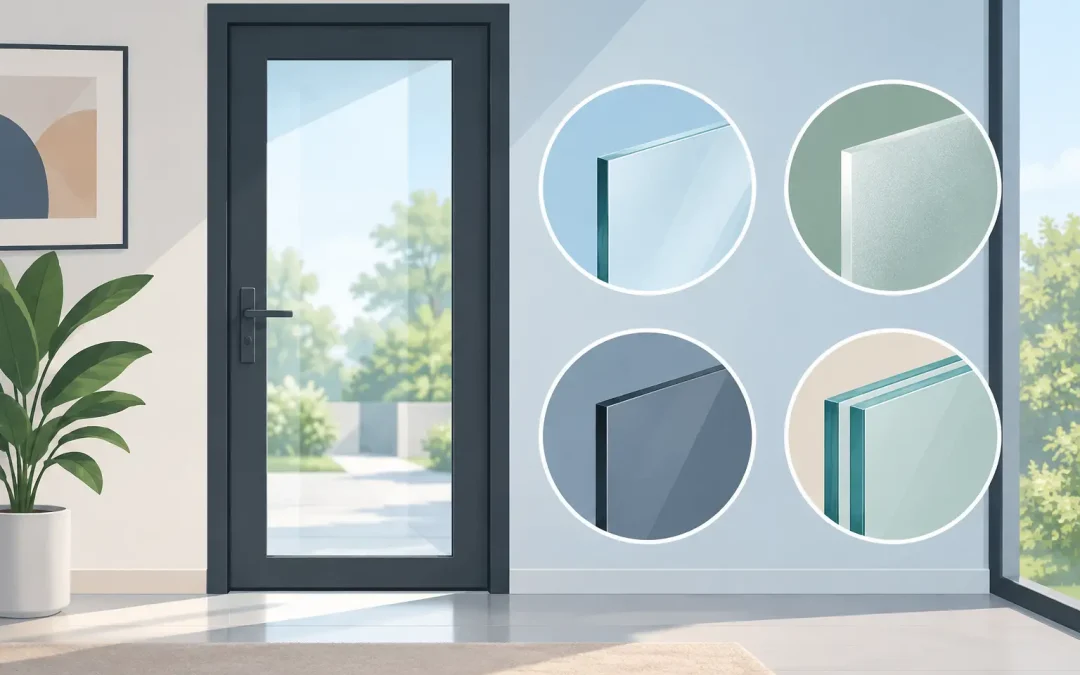
A glass door should let light in without leaving your family, tenants or customers exposed to an avoidable injury. That is why choosing the best safety glass for doors is not just about how clear it looks or what fits the frame. It comes down to where the door is, how it is used, and what should happen if the glass takes a hard knock.
For most door applications, the choice is between toughened safety glass and laminated safety glass. Both are made to reduce the risk of injury compared with ordinary glass, but they behave very differently when broken. The right one can make a busy entry, a sliding patio door or a shopfront safer without making the job more complicated than it needs to be.
Why ordinary glass is a poor fit for doors
Doors get more impact than most windows. They are opened with arms full of shopping, bumped by furniture during a move, kicked accidentally by kids, and pushed by wind. A pet can run into a clean pane. In a commercial setting, door glass may also deal with trolleys, foot traffic and attempted forced entry.
Ordinary annealed glass can break into large, sharp shards. That is the main hazard safety glass is designed to address. Safety glazing is generally required in areas where people are likely to fall against or walk into glass, including many doors, door panels and nearby sidelights. The exact requirement depends on the location, glass size, height and local building rules, so it is worth having a qualified glazier assess the opening rather than guessing from appearance alone.
Toughened glass: the everyday choice for many doors
Toughened glass, also called tempered glass, is heat-treated to make it much stronger than standard glass of the same thickness. When it breaks, it is designed to crumble into many small, blunt-edged pieces rather than dangerous long shards.
It is a popular option for hinged doors, sliding doors, French doors, shower doors and internal glass doors. It has a clean appearance, allows plenty of light through and handles everyday knocks well. For a straightforward replacement where impact safety is the priority, toughened glass is often the practical answer.
There is one key trade-off. Once toughened glass breaks, the whole pane generally falls away. That reduces cutting risk, but it does not keep the opening closed. If it is a ground-floor external door, a broken pane can leave the property exposed until it is repaired or boarded.
When toughened glass makes sense
Toughened glass suits doors where safe breakage matters most and ongoing security after breakage is less critical. Think internal doors, bathroom doors, enclosed patio areas, or doors in locations that are already well protected.
It is also a good option when you want a slim, simple glass panel and do not need extra acoustic performance. However, toughened glass cannot be cut, drilled or altered after it has been processed. All holes, notches and sizing need to be correct before manufacture. Accurate measuring is not a small detail here – it is essential.
Laminated glass: better when security matters too
Laminated safety glass is made from two or more sheets of glass bonded together with a tough clear interlayer. If the glass breaks, the interlayer helps hold the fragments in place. The pane may crack in a spiderweb pattern, but it can remain in the frame rather than immediately dropping out.
That makes laminated glass a strong choice for external entry doors, doors beside public footpaths, commercial premises, and areas where security is a concern. It can slow down a forced entry attempt and helps keep the weather, people and loose glass out of the opening after damage.
For homes, laminated glass is worth considering for front doors with large glass panels, sliding doors that open to a private yard, and low-level glazing near a doorway. It can also provide better sound reduction than a single pane of toughened glass, which may be useful near a busy road.
The trade-off with laminated glass
Laminated glass can cost more than toughened glass, and a cracked laminated pane still needs prompt replacement. Holding together does not mean it is safe to leave indefinitely. Damaged layers can lose clarity, allow moisture to enter, and compromise the door’s security or weather seal.
It is also heavier, so the frame, hinges, rollers and hardware need to be suitable. A proper site measure helps confirm whether the existing door system can take the chosen glass without creating problems with operation later.
The best safety glass for doors depends on the location
There is no one product that is the best answer for every door. A bathroom door has different needs from a street-facing office entrance. Start with how the area is used, then work back to the glass.
For an internal hinged door, toughened glass is usually the sensible option. It offers impact safety, looks tidy and is commonly used in homes. For a shower door or bathroom screen, toughened glass is also common because it is strong, clean-lined and suitable for wet areas when properly installed.
For a front door, consider laminated glass if the panel is large, low to the ground, or exposed to passers-by. The ability to hold together after impact adds a useful layer of protection. If privacy is a concern, the glass can be paired with obscure, patterned or frosted finishes rather than relying on curtains that block out daylight.
For sliding doors, both options can work. Toughened glass is common and performs well for everyday family use. Laminated glass is worth the extra thought when security, noise or retaining the pane after accidental breakage is a priority. The door system, panel size and roller capacity all need to be considered.
For commercial doors and shopfronts, laminated glass is often the better fit where security and public safety are high on the list. But the right specification can vary widely depending on the frame, exposure, access and insurance requirements. A glazier can match the glass to the actual risk rather than simply replacing like for like.
Thickness, glazing and hardware all matter
Safety glass is not just a matter of choosing a label. Thickness affects strength, weight and how the glass works in the frame. A larger pane usually needs a different specification from a small insert in a timber door. The wrong thickness can lead to poor fit, rattling, stress on hardware or a door that does not close cleanly.
The frame and seals matter as well. Glass needs enough edge cover, correct setting blocks and appropriate glazing materials to avoid pressure points that can cause breakage. With sliding doors, worn rollers or misaligned tracks can put unnecessary strain on the panel. Replacing glass without checking these issues may only postpone the next problem.
For doors with pet flaps, the glass must be measured and prepared correctly before installation. Toughened glass cannot be cut afterwards, so a new panel is normally required where a pet flap is being added. This is a job where a custom-made glass panel is safer and neater than trying to modify an existing one.
Do not ignore damaged door glass
A small chip at the edge of a toughened pane, a crack spreading from a corner, or a loose panel in a door frame deserves attention. Door glass is under regular movement and vibration, so minor damage can turn into a full break without much warning.
Keep children and pets away from cracked glass, avoid slamming the door, and do not tape over a crack as a long-term fix. If the glass has broken, clear the area only if it is safe to do so and arrange professional help. A qualified glazier can make the opening safe, measure for the correct replacement and ensure the finished panel suits the door’s use.
The best choice is the one that protects people first, fits the door properly and gives you the level of security the location calls for. When you are unsure, a quick on-site assessment can save you from fitting glass that looks right but is not right for the job.