
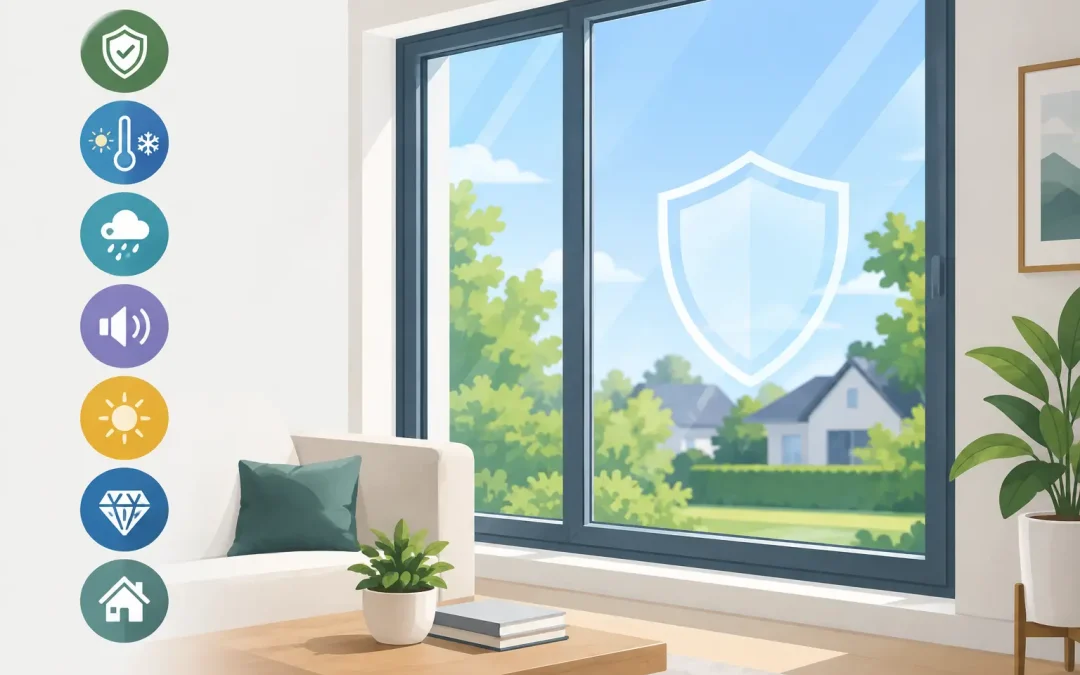
A window should let in light, not create a hazard. When glass breaks near a busy doorway, a child’s play area, a shower or a shopfront, ordinary glass can leave sharp pieces across the floor in seconds. That is where the benefits of safety glass windows become very practical: they reduce injury risks, help protect a property and give you a better fit for high-use areas.
Safety glass is not one single product. The two main types are toughened glass and laminated glass. Each breaks differently and suits different jobs, so the best choice depends on where the window sits and what you need it to do.
1. Safer breakage around people and pets
The clearest benefit is in the way safety glass behaves when damaged. Toughened glass is heat-treated to be stronger than standard glass. If it does break, it generally crumbles into many small, blunt-edged pieces rather than large, dangerous shards.
That makes it a sensible choice for areas where people are likely to bump into glass, such as low windows, glass doors, bathroom glazing and panels close to footpaths. It is also useful in busy commercial spaces where a broken pane needs to be less likely to cause an injury before repairs can be carried out.
Laminated glass takes a different approach. It has an interlayer between two sheets of glass, which helps hold broken pieces together. A hard impact may crack the glass, but the panel can remain largely in place rather than falling into the room. For families with young children or pets, that extra containment can make a real difference.
2. Better protection against forced entry
A smashed window is more than a glazing problem. It can leave a home, rental or business exposed until the opening is secured. Laminated safety glass can make forced entry more difficult because the interlayer holds the pane together after impact.
It is not a replacement for good locks, alarms or sensible security habits. A determined intruder may still get through, particularly with repeated force. But laminated glass can slow the process down, create more noise and help prevent an immediate opening being made through the pane.
For ground-floor windows, sidelights beside entry doors, shopfronts and properties that sit empty for parts of the day, this added delay may be worth considering. Your glazier can assess whether laminated glass is suitable for the frame and location, rather than simply replacing like for like.
3. A stronger option for everyday knocks
Windows near doors, driveways, decks and outdoor living areas get more than their share of knocks. A ball, a bike handlebar, a moving chair or a slipped tool can be enough to crack ordinary glass. Toughened glass is designed to cope better with everyday impact than standard annealed glass.
That does not mean it is unbreakable. A sharp strike on an edge, a severe impact or an issue with the frame can still cause damage. The benefit is that toughened glass provides a useful extra margin in locations where accidental contact is more likely.
This can be especially helpful for landlords and property managers looking to reduce repeat damage in common problem areas. Choosing the right glazing at replacement time may save another urgent call-out later.
4. Improved comfort from UV and noise control
One of the less obvious benefits of safety glass windows is that laminated glass can do more than manage breakage. Depending on the glass and interlayer selected, it can reduce the amount of UV passing through the window. That can help limit fading on flooring, curtains, furniture and stock displayed near a window.
Laminated glass may also soften outside noise. It will not make a property silent, and the result depends on the whole window system, including frames, seals, gaps and whether double glazing is used. Still, it can be a worthwhile option for bedrooms facing traffic, home offices or commercial premises in noisy locations.
If warmth in winter or heat reduction in summer is the main concern, ask about the full glazing specification rather than assuming safety glass alone will solve it. Glass thickness, coatings, window orientation and the condition of the frames all matter.
5. Support for compliant glazing in risk areas
Building requirements often call for safety glazing in places where broken glass could cause a serious injury. This can include glass close to doors, low-level glazing, bathroom areas, stairways and certain windows near wet areas or walkways.
The exact requirement depends on the building, the glass location and the applicable rules. This is why a professional measure and assessment matters. What looks like a straightforward broken-pane replacement may need safety glass to meet current requirements, particularly if the original glazing is older.
For property owners, this is not about adding complexity to a simple repair. It is about making sure the replacement is appropriate for the risk. A qualified glazier can explain the options in plain language and identify whether toughened or laminated glass is the better match.
6. A cleaner outcome after accidental damage
No broken window is convenient, but the type of breakage affects what happens next. Toughened glass tends to fall into small pieces, while laminated glass often stays bonded to its interlayer. Both can reduce the chance of large, jagged shards being scattered through the property.
That is useful after an accident, but it is still important to keep people and pets away from the area. Do not press on cracked glass or try to remove a damaged panel yourself. Clear the immediate area if it is safe to do so, cover the opening only if you can do it without touching unstable glass, and arrange a professional repair.
A proper replacement includes removing the damaged material safely, measuring accurately, fitting the new glass securely and cleaning up the work area. The job is not finished just because the opening has been covered.
7. More choice for design without giving up safety
Safety glass does not have to make a home or business look industrial. It is available for clear windows, frosted bathroom glass, doors, balustrades, shower screens and custom panels. You can often keep the appearance you want while choosing glass better suited to the location.
For example, frosted safety glass can provide privacy in a bathroom without blocking all the natural light. Laminated glass may suit a large front window where security and noise are concerns. Toughened glass can be a practical option for a door panel exposed to daily traffic.
The trade-off is cost. Safety glass usually costs more than ordinary glass, and laminated glass can be more expensive than toughened glass. It may also require a particular thickness or specification, depending on the frame and application. However, when it prevents an injury, improves security or meets the requirements for a risk area, it is often money well spent.
Choosing between toughened and laminated glass
Toughened glass is often the right choice when stronger glass and safer fragmentation are the priority. It is commonly used where accidental impact is likely, including doors, bathrooms and low-level panels. One point to remember is that it cannot be cut, drilled or reshaped after toughening, so accurate measuring before manufacture is essential.
Laminated glass is often the better option where holding the pane together matters most. It can suit security-sensitive windows, upper-level glazing, noisy streets and areas where falling pieces would be a concern. Because it remains in place after cracking, it may provide temporary protection while a replacement is organised, although it should still be inspected promptly.
There is no one-size-fits-all answer. The right glass depends on the opening, the frame, the building use, local requirements and how the area is used every day.
If you are replacing cracked, broken or outdated glass, use the opportunity to ask whether safety glass is appropriate for that spot. A few clear questions before the job starts can lead to a safer, more practical result for years to come.