
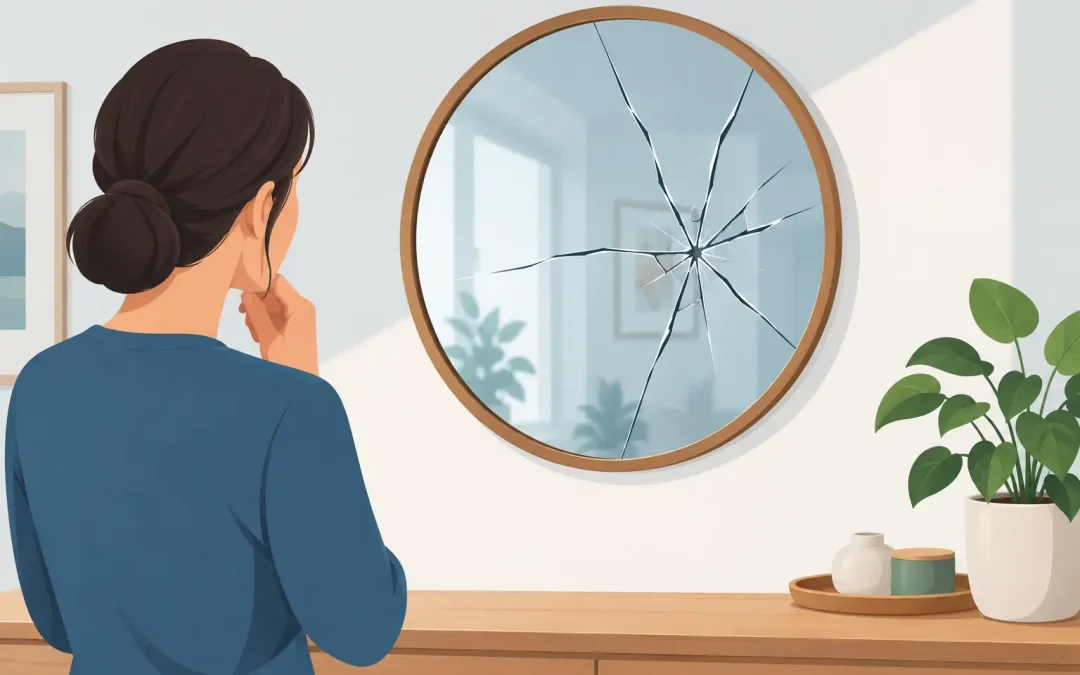
A crack across a mirror can look like a small cosmetic problem, especially if it is tucked into a bathroom, wardrobe door or hallway. But are cracked mirrors dangerous? Sometimes, yes. The real risk depends on where the crack is, how the mirror is fixed, whether the glass is still stable, and who uses the space.
A small hairline crack in a securely mounted mirror is not always an emergency. A large cracked mirror, a panel with loose edges, or glass that has been hit near a corner needs more caution. Mirrors are heavy, sharp when broken, and often fitted at a height where falling glass can hurt someone quickly.
The sensible approach is simple: keep people away from it, do not try to test the crack with your hand, and arrange a proper assessment if there is any chance the mirror could shift or break further.
Are cracked mirrors dangerous in your home or business?
The main concern is not that a crack will somehow spread on its own overnight. It is that the damage has reduced the mirror’s strength. A knock from a door, a bumped vacuum, a child leaning against it or normal movement in a wardrobe door can turn one visible crack into loose, sharp pieces.
Large wall mirrors deserve particular care. Their weight is supported by fixings, adhesive, a frame, or a combination of these. If the mirror has cracked because it was struck, the same impact may have affected its mounting. If it has cracked without an obvious cause, there may be pressure from an uneven wall, a tight frame, worn hinges, or movement in the surface behind it.
A cracked mirror in a commercial setting can create a wider problem. In a shop, gym, office, salon or rental property, people may brush past it all day without noticing the damage. That increases the chance of a cut or a further impact, and leaves the person responsible for the property with a safety issue to deal with.
The highest-risk situations
Treat the mirror as urgent if pieces are missing, the crack reaches an edge, the glass is chipped, or you can see the panel bowing or lifting away from the wall. The same applies if the mirror is on a sliding wardrobe door, a hinged cabinet, a bathroom door, or anywhere it moves when opened and closed.
A cracked full-length mirror near a bed, entry, stairwell or narrow walkway is also worth addressing promptly. These are busy areas where someone could catch a bag, shoulder or piece of furniture on the glass. In homes with young children or pets, it is better to remove the temptation to touch or investigate the damaged area.
Moisture makes bathroom mirrors another special case. Water does not usually cause a sudden crack by itself, but damaged mirror backing and exposed edges can deteriorate over time. If the mirror is cracked near a basin, shower, or damp wall, replacement is generally the safer long-term fix.
What to do straight away
Start by making the area safe. Keep children, pets, customers and visitors clear of the mirror. Move furniture or loose items away if you can do so without brushing against the glass. If the mirror is on a door, cupboard or wardrobe, avoid using it until it has been checked.
Do not press on the cracked area to see whether it moves. Avoid sticking tape directly across a damaged mirror unless you have been advised to do so by a glazier. Tape can help contain fragments in some removal situations, but it does not make a compromised mirror safe to keep using. It can also conceal how far the damage has spread.
If there are loose pieces on the floor, wear closed shoes and keep your hands protected. Pick up larger pieces carefully from the outside edges only, place them in a rigid container or wrap them securely, and keep them away from rubbish bags that can split. For fine splinters, a careful clean-up is needed before people return to the area. Never run bare hands over the floor or use a towel that may later be handled without care.
If the mirror is still in one piece but looks loose, leave it alone. A large panel can be much heavier than it appears, and adhesive-backed mirrors can release suddenly as the backing fails. This is a job for a qualified glazier with the right handling equipment and a safe plan for removal.
Can a cracked mirror be repaired?
In most cases, a cracked mirror cannot be repaired invisibly or restored to its original strength. Products sold as glass repair kits are designed for small chips or windscreen damage, not for household mirrors. They will not reliably hold a cracked mirror together, fix damaged backing, or make a large panel safe.
Replacement is usually the practical answer. A glazier can measure the opening, assess the fixing method, remove the damaged mirror safely and fit a new panel cut to size. This is especially useful for mirrors with unusual shapes, polished edges, cut-outs, bevels, or a precise fit inside a frame or joinery.
There can be an exception with a very small decorative mirror where the crack is contained within a thick, secure frame and the item can be moved away from people. Even then, the crack remains visible and the mirror remains weaker than it was. For a functional wall mirror, bathroom mirror or wardrobe panel, replacing it is normally the better call.
Why mirrors crack without being smashed
Not every cracked mirror comes from a dramatic impact. Sometimes the cause is pressure. A mirror fitted too tightly into a frame can crack as timber expands or contracts. A wall that is not flat can place stress on the glass. A wardrobe door may twist slightly over time, putting pressure on a mirrored panel.
Heat can contribute as well. Direct afternoon sun, heaters close to the glass, or rapid temperature changes may expose an existing weakness. Damage at the edges is particularly significant because that is where glass is most vulnerable to stress.
Finding the cause matters. If a replacement mirror is fitted without correcting a warped door, faulty fixing, uneven wall or tight frame, the new glass may face the same problem. A proper measure and installation help avoid a repeat job.
When to call a glazier
Call for professional help as soon as possible if the mirror is large, loose, shattered, mounted high on a wall, installed in a moving door, or located in a high-traffic area. The same goes for mirrored wardrobe doors and bathroom mirrors near water or electrical fittings. These jobs involve more than simply lifting out a piece of glass.
For landlords and property managers, prompt action also helps prevent a minor maintenance issue becoming an injury or a complaint. Take a clear photo from a safe distance for your records, keep the space isolated, and arrange repair before the property is used normally again.
A qualified glazier can advise whether the mirror needs immediate removal, measure for a replacement, and make sure the new glass is fitted appropriately for its location. Glass Direct handles cracked mirrors across Auckland, from small household panels to larger custom-fit replacements, with removal and clean-up taken care of.
A safer way to deal with mirror damage
A cracked mirror does not always mean panic, but it should not be ignored. If the damage is small and the panel is secure, you may have enough time to book a replacement around your schedule. If it is loose, chipped, spreading, or in a place where people could knock into it, treat it as a safety issue now.
Keep the area clear, resist the urge to patch it yourself, and get the glass assessed before one crack becomes a much messier problem.