
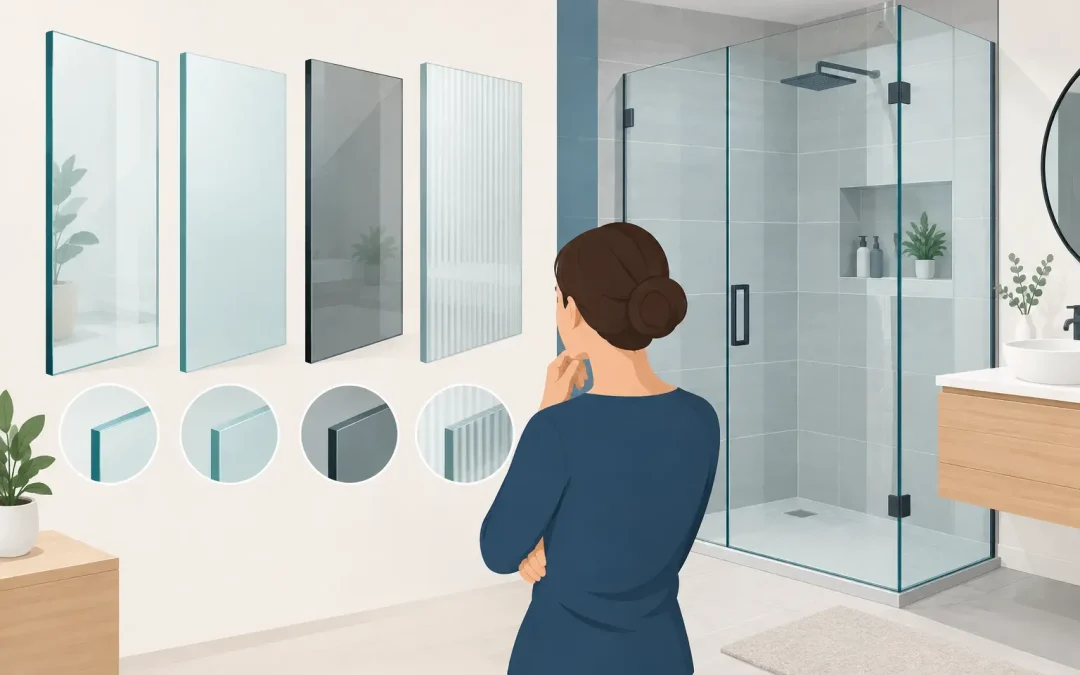
A shower screen can make a small bathroom feel open, keep water where it belongs, and give an older space a clean new look. But glass is not a one-size-fits-all purchase. When working out how to select shower glass, the best choice comes down to your bathroom layout, who uses the shower, how much cleaning you are happy to do, and whether the walls and floor can support the design.
The right screen should feel solid, open smoothly, contain splashes and suit the way your household actually uses the bathroom. A qualified glazier can measure the space and explain the practical options before any glass is ordered, which helps avoid costly surprises on installation day.
Start with the shower layout
Before choosing glass, look closely at the shower area. Is it a shower over a bath, a corner shower, a walk-in space or an alcove between three walls? Each layout calls for a different approach.
For a shower over a bath, a fixed panel or hinged bath screen is usually the most practical option. It gives you enough protection from splashes without closing in the bath. A fixed panel is simple and has fewer moving parts, while a hinged screen can swing out for easier access and cleaning. The trade-off is that hinged panels need clear space to open and should not hit a vanity, toilet or towel rail.
A corner shower often suits a front panel with a return panel, while an alcove can take a single door, sliding door or fixed panel. Walk-in showers are popular for their open look and easy access, especially in modern bathrooms. They do need a well-planned shower head position, floor fall and panel size, though. If the panel is too short or too narrow, water can escape onto the floor.
Do not choose a screen from a photo alone. The same design can work beautifully in one bathroom and be awkward in another because of door swings, plumbing positions or limited floor space.
Choose a glass thickness that suits the job
Shower glass is generally toughened safety glass. If it breaks, it is designed to break into small pieces rather than large, sharp shards. Thickness affects the feel of the screen, the hardware required and, in some cases, the design options available.
Six millimetre glass is commonly used for framed shower screens and lighter applications. It can be a cost-effective choice where the frame provides support. Eight millimetre glass is a popular middle ground for semi-frameless and some frameless screens, offering a more substantial feel without adding unnecessary weight.
Ten millimetre glass is often used for frameless fixed panels and doors. It has a solid, premium feel and works well with minimal hardware, but it is heavier. That means the hinges, wall fixings and supporting surfaces all need to be suitable. Thicker is not automatically better if it creates an oversized door in a tight room or adds cost without improving the result.
A glazier will assess the span, door width and fixing points to recommend the right thickness. This is especially useful in older homes, where walls may not be perfectly straight or may need extra support behind the tiles.
Framed, semi-frameless or frameless?
This decision usually comes down to budget, appearance and cleaning preferences.
Framed shower screens have aluminium framing around the glass. They are dependable, generally more affordable and can be a sensible choice for rental properties or family bathrooms. The frame offers support and helps with water containment, but it creates more edges and channels that need regular cleaning.
Semi-frameless screens reduce the visible framing while retaining some support around the perimeter. They offer a cleaner appearance than fully framed designs and can be a good balance between cost and style. They are often a practical choice when you want an updated look without going fully frameless.
Frameless shower glass uses thicker toughened glass and discreet hinges or brackets. It can make a compact bathroom look larger because there is less visual clutter. It is also easier to wipe down around the edges. However, frameless glass needs accurate measuring, sound fixing points and careful installation. Small gaps are normal and allow doors to operate, so good screen design is essential to keep water inside the shower area.
Think about access before picking a door
A beautiful hinged door is no help if it blocks the bathroom when open. Measure the clear floor space in front of the shower and consider how people enter and leave it.
Hinged doors provide a wide opening and are straightforward to use, but they need room to swing. Sliding doors are useful where space is tight because they do not project into the room. They have tracks or rollers, however, and those components need occasional cleaning to keep them moving freely.
A fixed walk-in panel has no door at all. It is easy to access and can suit people with mobility needs, provided the entry is wide enough and the floor is designed to drain correctly. For households with young children, think about where towels, bath mats and wet feet will be. A screen that looks minimal but leaves a large splash zone may not suit a busy family bathroom.
If accessibility is a priority, raise it early. The right entry width, handle placement and low-threshold design can make daily use much easier without making the room feel clinical.
Select glass that matches your privacy and cleaning needs
Clear glass is the most common choice because it keeps sightlines open and lets light travel through the room. It is particularly effective in smaller bathrooms and shows off feature tiles. The downside is that water spots, soap residue and streaks are more visible if the glass is not wiped down regularly.
Frosted, obscure or patterned glass gives more privacy. It can be useful in an ensuite where the shower is visible from other parts of the room, or in a shared bathroom. Keep in mind that heavier patterns can make a small room feel more enclosed and may be harder to match if a panel ever needs replacing.
Low-iron glass is another option for homeowners focused on a very clear, high-end appearance. Standard glass can have a slight green tint, most noticeable along its edges or against pale tiles. Low-iron glass reduces that tint, but it comes at a higher price. It is usually a style choice rather than a necessity.
Protective glass coatings can make cleaning easier by helping water and residue run off the surface. They are worth considering, particularly in hard-water areas, but they do not replace regular care. A squeegee after showering and a non-abrasive cleaner will do more for the life of the glass and hardware than harsh chemicals ever will.
Do not overlook hardware and finishes
Handles, hinges, brackets and channels might be small, but they affect both function and the final look. Chrome is a familiar choice that works with many tapware styles. Matte black gives a stronger contemporary contrast but can show mineral marks more readily. Brushed nickel, brushed brass and gunmetal can help tie the screen into matching bathroom fittings.
Choose a finish you will still like when tapware trends move on. More importantly, make sure the hardware is suited to wet areas and the weight of the glass. Quality hinges should hold their position, operate smoothly and be installed with the correct clearances.
Ask where seals and water deflectors will sit as well. These clear components are not always obvious in display photos, but they play a big part in reducing leaks. They may need replacement over time, which is normal maintenance for a working shower screen.
Measure last, but involve a glazier early
Tiles, waterproofing, wall linings and floor falls all influence the finished screen. For that reason, glass should be measured after tiling is complete, not ordered from building plans or rough dimensions. Even new walls can be slightly out of plumb, and custom-cut glass allows for those real-world variations.
Professional measuring also checks whether wall fixings will land in solid support, whether a door has enough clearance, and whether the shower tray or tiled floor will manage water correctly. This is where a custom solution earns its keep. A screen that is a few millimetres wrong can be difficult to install, rub on the floor or leave an unwanted gap.
For a renovation, keep the shower glass decision in the plan from the start, then arrange the final measure once the room is ready. You will get a screen that fits the bathroom you have, not the one you hoped the measurements would produce.