
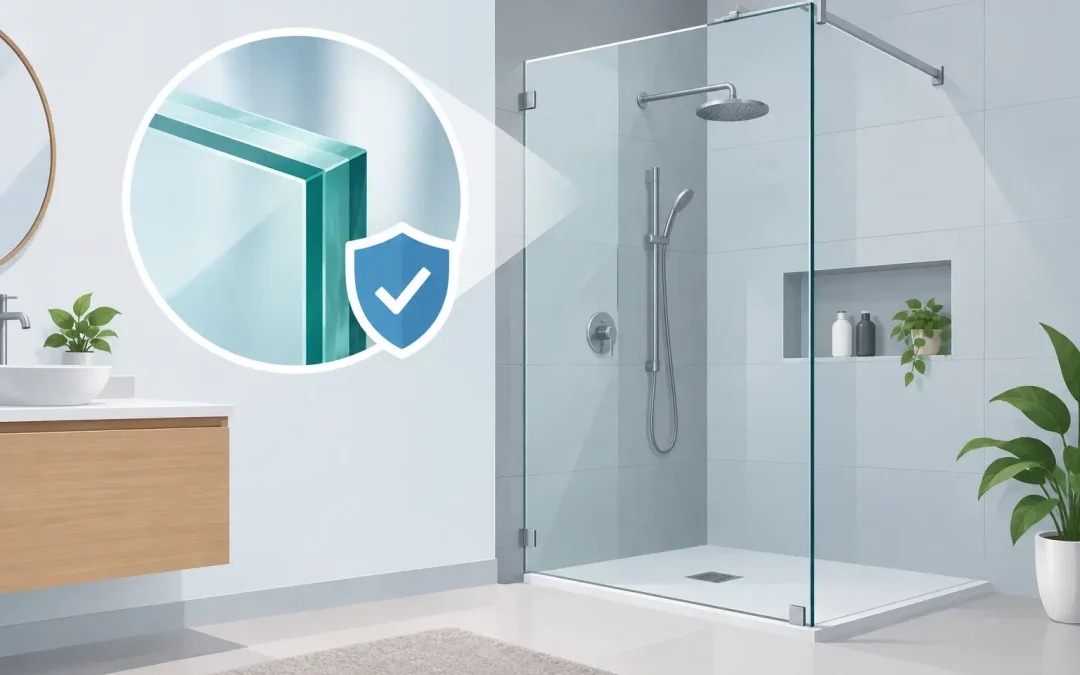
A shower screen can look perfectly ordinary right up until a crack appears, a fitting loosens or the glass breaks without warning. So, are shower screens safety glass? In a properly installed modern bathroom, the glass used in and around a shower should be safety glass. But the age of the screen, its condition and the way it was installed all matter.
For Auckland households, landlords and property managers, this is not just a question of bathroom style. A shower screen sits in a wet, hard-surfaced space where slips are common and bare feet are close by. The right glass is designed to reduce the risk of serious injury if it fails. If you are unsure what is in your bathroom, a qualified glazier can inspect it and explain the practical options.
What makes shower screen glass safe?
Safety glass is made or treated so that it behaves differently from ordinary glass when broken. The two main types are toughened glass and laminated glass.
Toughened glass, also called tempered glass, is the material most people associate with modern shower doors and frameless screens. It is heat-treated during manufacture to make it much stronger than standard glass. If it breaks, it is intended to fragment into many small, relatively blunt pieces instead of long, sharp shards.
Laminated glass is made from two or more layers of glass bonded with a clear interlayer. When broken, much of the glass remains held together by that interlayer. It is commonly used where keeping the panel in place after breakage is especially useful, although the best choice depends on the design and location.
Neither option makes a shower screen unbreakable. Safety glass is about reducing harm when a panel fails, not making it immune to impact, poor installation or wear over time.
Are shower screens safety glass in every bathroom?
Not necessarily, particularly in older homes or bathrooms that have been altered over the years. Current glazing requirements recognise that glass in hazardous locations needs special consideration. Shower enclosures and the immediate area around a bath or shower are places where safety glazing is generally expected.
However, an older fixed panel may have been installed before current expectations, and a previous repair may not have used the right material. It is also possible for safety glass to be fitted incorrectly, supported by worn hardware or placed under pressure from an out-of-square wall or floor.
A screen can therefore be made from safety glass and still need attention. Look at the whole setup, not only the panel itself. Hinges, channels, seals, brackets and door alignment all affect how safely the glass performs.
Look for a safety-glass marking
Many toughened or laminated glass panels carry a small permanent mark, often near a lower corner or edge. It may include the manufacturer name, a safety-glass reference and certification information. This mark is usually etched or printed onto the glass rather than applied as a removable sticker.
If you cannot find a mark, do not assume the panel is ordinary glass. Marks can be difficult to spot, hidden by a frame, worn away, or located in a corner covered by a fitting. Equally, do not rely on appearance alone. Clear glass, frosted glass and tinted glass can all be safety glass, and they can all look similar from across the room.
The safest approach is to have the screen assessed, especially if it is old, damaged or part of a rental property inspection.
Why toughened shower glass can break suddenly
People are often surprised when a shower screen appears to shatter for no obvious reason. Toughened glass stores internal tension as part of its manufacturing process. When it fails, the breakage can be sudden and dramatic, even if the original cause happened earlier.
A knock on the edge of the panel is one common cause. The face of toughened glass is strong, but edges and corners are more vulnerable. A hard object, a loose shower door, a metal fitting or even repeated contact with a tiled wall can create a small chip that later develops into a full break.
Installation pressure is another issue. Glass must be measured accurately and allowed appropriate clearances. If a panel is forced into place, twisted by misaligned hinges or pinched by overtightened fittings, stress can build up over time. Movement in the building, worn rollers and a door that drags can add to the problem.
Very occasionally, an issue within the glass itself can contribute to unexpected breakage. That does not mean every shattered shower screen was defective. The practical point is simple: once glass has broken, or once a panel shows signs of stress, it needs professional attention rather than a quick patch.
Warning signs your shower screen needs checking
A broken screen is an obvious hazard, but the earlier signs are often easy to miss. A small chip on an exposed edge, a crack radiating from a corner or a panel that has started rubbing on a wall should be dealt with promptly.
Also pay attention if the door no longer closes smoothly, swings on its own, catches on the floor or has visibly loose hinges. Blackened, brittle or missing seals are less likely to cause a panel to shatter on their own, but they can allow water to escape and may point to an ageing installation that deserves a closer look.
Do not keep using a cracked shower screen just because the crack is small. Glass does not repair itself, and bathroom heat, moisture, vibration and day-to-day movement can make damage worse. Avoid slamming the door or leaning on the panel while you arrange a replacement.
What to do if a shower screen breaks
Keep people, pets and bare feet away from the area first. Shut the bathroom door if possible, and do not try to sweep up broken glass while someone is still showering or walking through the room.
Put on enclosed shoes and gloves before dealing with any loose pieces. If the panel is still partly in place, leave it alone. Removing hanging or stressed glass without the right tools can turn a manageable repair into an injury. Take a few photos from a safe distance for your landlord, property manager or insurer if needed, then arrange for a glazier to make the area safe and replace the panel.
A professional replacement is more than matching the size of the old glass. The glazier should check the opening, the hardware, the supporting walls and the screen design. That helps ensure the new panel is the correct safety glass and that it is fitted without putting unnecessary stress on it.
Replacement is a chance to improve the whole screen
If a shower screen has failed because of ageing hinges, poor alignment or a damaged channel, replacing only the glass may not always be the best value. Sometimes a new set of fittings, updated seals or a redesigned screen will provide a safer, cleaner result.
Frameless and semi-frameless screens can look great, but they rely on accurate measuring and solid support. Fully framed options may suit some bathrooms better, particularly where walls are uneven or where a more forgiving, budget-conscious solution is needed. There is no one right style for every home.
For rental properties and busy family bathrooms, practical details matter too. Easy-clean glass, reliable door movement and seals that keep water where it belongs can reduce ongoing maintenance. A well-fitted screen should feel secure and operate smoothly without needing to be forced.
Get the right advice before a small issue grows
If you are asking whether your shower screen is safety glass because something does not look right, trust that instinct. A quick check is far easier than dealing with shattered glass on a tiled floor.
Glass Direct can assess damaged or ageing shower glass, measure for a custom replacement and leave the bathroom tidy once the job is done. Whether it is a visible crack, a loose door or an older screen you are not confident about, getting it checked now helps keep the bathroom safer for everyone who uses it.