
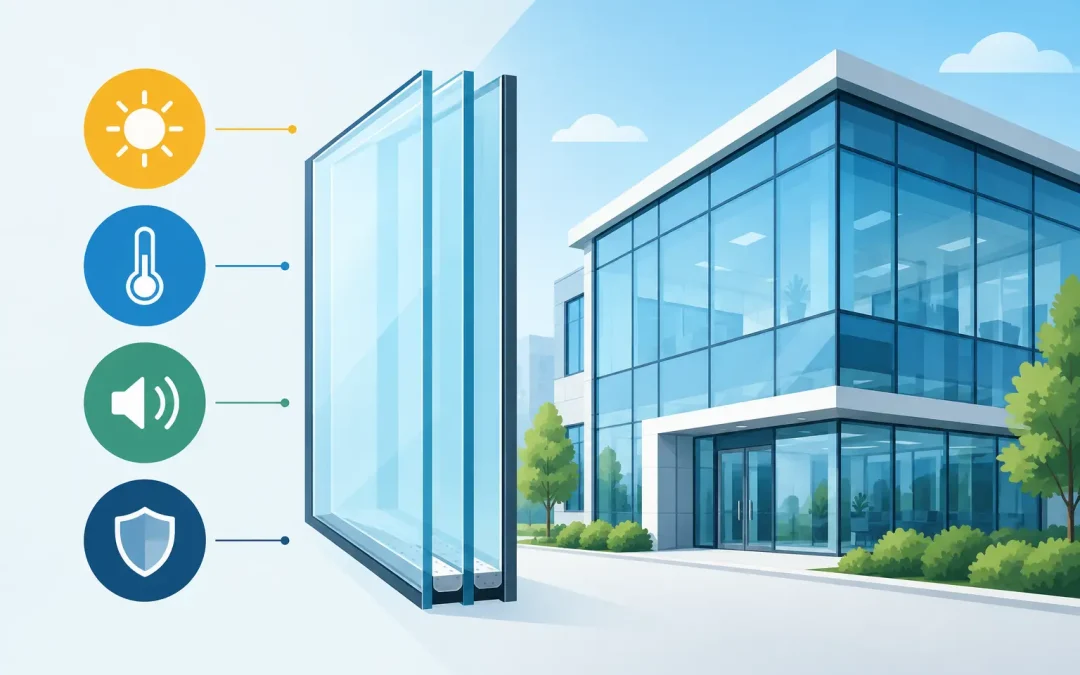
A smashed shopfront, cracked office window or damaged glass door is never just a pane of glass. For commercial premises, the replacement has to suit the building, the location and the job it needs to do. Commercial glazing ratings are the shorthand used to check whether a glazing system can handle things such as wind pressure, impact, heat loss, noise and, in some cases, fire.
You do not need to become a glass specialist before arranging a repair. You do need to know that the lowest-cost replacement is not always the right one. A qualified glazier can assess the opening, identify the existing glass and explain the options in plain language before work starts.
What commercial glazing ratings actually tell you
A rating describes how glass or a complete window and door system performs under a particular test or standard. The key point is that a rating often applies to the whole system, not only the glass itself. Frame strength, seals, fixing methods, glass thickness and panel size can all affect the final result.
That matters when a commercial property has large windows, exposed elevations, busy public access or specialist requirements. A toughened glass panel may be suitable for a door, for example, but it does not automatically make every large shopfront safe in a high-wind location.
In New Zealand, glazing work needs to meet the relevant Building Code requirements and applicable standards. The exact requirement depends on the building, its use, where the glass sits and whether the work is a like-for-like repair or part of a larger alteration. Your glazier should check the practical requirements for the specific opening rather than relying on a label from another job.
Safety glazing ratings for doors and public areas
Safety is usually the first question for commercial glass. It is especially important around entry doors, glass beside doors, partitions, balustrades, low-level windows and areas where staff or customers could fall against the glass.
Safety glass is designed to reduce the risk of serious injury if it breaks. Toughened glass is heat-treated and breaks into many small pieces. Laminated glass uses an interlayer that helps hold broken pieces together. Both have their place, but they behave differently after impact.
Toughened glass is often a practical choice for doors and internal partitions where impact resistance is needed. Laminated glass can be the better option where holding the panel in place after breakage matters, such as a street-facing window or a security-sensitive area. It can also provide useful noise reduction, depending on the make-up of the glass.
Safety markings are another useful check. Compliant safety glass is normally permanently marked so its type can be identified after installation. If you are replacing damaged glass in a door or shopfront, do not assume ordinary float glass is acceptable because it looks the same at a glance.
Impact is not the same as security
A common misunderstanding is that safety glass and security glass mean the same thing. They do not. Safety glazing focuses on reducing injury from accidental human impact. Security glazing is chosen to resist forced entry, delay break-ins or keep broken glass together for longer.
For a dairy, office, showroom or ground-floor retail site, laminated glass may be considered as part of a wider security approach. But glass alone is not the whole answer. The frame, glazing beads, locks, shutters and alarm system all matter. A glazier can help you choose a sensible repair without overselling a single product as a complete security solution.
Wind ratings matter more than most owners expect
Auckland weather can put glazing under real pressure, particularly on upper floors, open corners and buildings near the coast. Wind loading is the force pushing and pulling on a window or glazed façade. The larger the panel and the more exposed the site, the more carefully the glass thickness, type and support need to be considered.
Wind performance is not something you can judge by looking at a pane. Two windows with the same glass can have very different requirements because one is small and sheltered while the other is a wide panel several storeys up.
When assessing a replacement, a glazier will consider panel dimensions, height above ground, building exposure, frame condition and how the glass is supported. This is one reason a quick measure is valuable. Replacing a broken panel with whatever is readily available can create problems later if the glass is not suitable for the opening.
If a shopfront has been damaged during a storm, temporary boarding may be needed first to keep the premises secure and dry. The permanent replacement should then be measured and specified properly, rather than rushed simply because the opening has been closed off.
Thermal ratings and the cost of heating or cooling
Thermal performance is about how readily heat moves through the glazing. The figure most people hear about is the U-value. Put simply, a lower U-value means less heat transfer through the glass and frame, which can help a building stay more comfortable and reduce pressure on heating and cooling systems.
Solar heat gain is the other side of the equation. Glass that admits more solar energy can be useful in a cool, shaded space, but it may make a west-facing office or sunny showroom uncomfortably hot. Tinting, coatings and insulated glass units can change this balance.
There is no single best thermal rating for every commercial job. A street-facing café may value clear views and natural light, while an office with afternoon sun may need stronger control of glare and heat. Insulated glass units can improve comfort, but they cost more than single glazing and may not suit every existing frame without further work.
For a one-off broken pane, matching the existing glazing is often the practical path. For repeated condensation, uncomfortable rooms or a planned refurbishment, it is worth discussing whether an upgrade would make better long-term sense.
Acoustic ratings for quieter commercial spaces
Noise ratings measure how well a glazing system reduces sound transmission. They matter for offices beside busy roads, medical rooms, hospitality venues, meeting spaces and apartments above commercial areas.
Thicker glass does not always solve a noise issue on its own. The best result may come from a combination of laminated glass, different glass thicknesses in a double-glazed unit, effective seals and a well-fitted frame. Gaps around the window can undo much of the benefit of upgraded glass.
Acoustic glazing is a good example of why the rating needs context. If road noise is coming through a poorly sealed aluminium window, replacing only the pane may bring limited improvement. If the noise is mainly from a neighbouring tenancy through an internal partition, the wall and door construction may matter just as much as the glass.
Fire-rated glazing needs a certified system
Fire-rated glass is a specialist product used where a building design requires a fire or smoke barrier. It is not simply tougher glass, and ordinary toughened or laminated glass should never be treated as a substitute.
A fire-rated installation relies on a tested system that may include specific glass, framing, seals, beads and fixings. Changes to any of these parts can affect its performance. If a fire-rated panel is cracked or broken, make the repair a priority and ensure the replacement is matched to the certified system requirements.
For property managers, keeping records of the original system, location and any labels on the glass can make future repairs much easier. Where records are unclear, the glazier may need to investigate before ordering replacement materials.
What to ask when replacing commercial glass
You do not need a list of technical numbers to get the right result. A few clear questions will help: Is this safety glass? Does the replacement suit the panel size and wind exposure? Will it match the existing thermal or acoustic performance? Is the frame in good condition? Does this opening have any fire-rating or compliance requirements?
It is also worth telling the glazier how the space is used. Mention public access, children, high-value stock, privacy concerns, after-hours security, traffic noise or harsh afternoon sun. These details often matter more than asking for a particular glass type by name.
For urgent damage, make safety the first priority. Keep people away from broken glass, avoid touching loose pieces and secure the area if you can do so safely. A professional can then measure, remove the damaged glass, arrange the right replacement and leave the site clean and usable.
The right rating is not about buying the fanciest glass. It is about fitting glass that does its job properly for your building, your people and the conditions outside your door.