
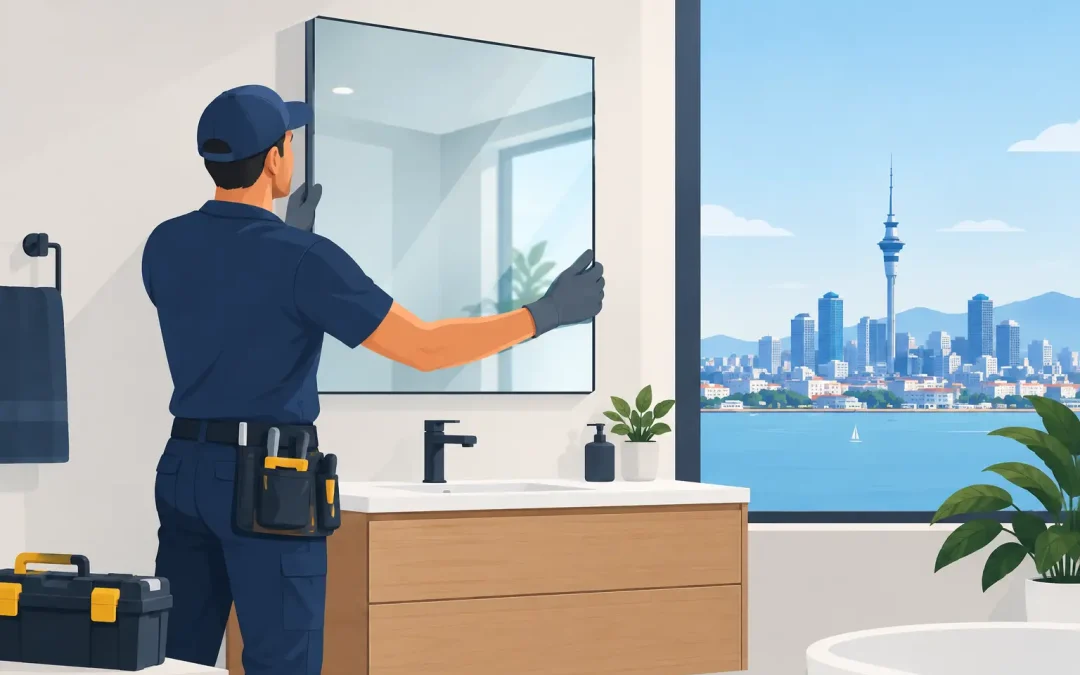
A cracked bathroom mirror can make a perfectly tidy room feel unfinished. A shattered hallway mirror is more urgent, especially with children, pets or bare feet nearby. Mirror replacement cost is usually straightforward once a glazier has seen the damage, measured the opening and confirmed the type of mirror required.
The short answer is that there is no single price for every job. A small, plain mirror fitted into an easy-to-reach bathroom space costs far less than a large custom wall mirror, a shaped panel or a mirror that needs careful removal from a tight commercial fit-out. The right replacement should look good, sit safely and suit the way the room is used.
What affects mirror replacement cost?
Mirror size is one of the biggest factors. More glass means more material, more handling and often more than one person needed for safe installation. A compact vanity mirror may be a relatively simple job, while a full-height gym, wardrobe or feature-wall mirror needs careful transport, lifting and fixing.
The type and thickness of glass also matter. Standard clear mirror is commonly used in bathrooms, bedrooms and hallways. Safety-backed or safety glass options may be needed where people could fall against the mirror, where it is fitted low on a wall, or where the location has particular safety requirements. These products cost more than basic mirror, but they are often the sensible choice for busy family homes and public-facing premises.
Then there is the finish. A clean rectangular mirror with polished edges is usually simpler to produce than one with a bevelled edge, cut-outs for lights or power points, rounded corners, drilled holes or a custom shape. Antique, tinted and decorative mirrors can also take longer to source and may sit at a higher price point.
Access can change the quote more than people expect. A mirror above a basin may be easy to reach. One installed up a stairwell, behind a reception counter, inside a lift, or on a high wall can require extra labour, safety equipment or out-of-hours work. If the old panel is heavily damaged or bonded firmly to the wall, removal needs to be done slowly to avoid damaging tiles, paintwork or surrounding joinery.
Typical mirror replacement costs in Auckland
For an indication only, a small to medium standard mirror replacement in an accessible residential setting may start from a few hundred dollars. Larger made-to-measure mirrors, bathroom panels with polished edges, or mirrors requiring more involved removal and fitting commonly run into the mid hundreds and beyond. Large feature mirrors, commercial installations and specialist safety mirror can cost substantially more.
These are broad guide figures, not a substitute for a measure and quote. The same-sized mirror can have very different costs depending on its thickness, edge finish, backing, mounting method and whether the existing glass must be removed. A qualified glazier can confirm the practical details before work begins, so there are fewer surprises on installation day.
If you are comparing quotes, check that each one covers the same scope. The cheapest figure may only allow for the new glass, while another quote includes measuring, cutting, delivery, removal of broken mirror, installation, clean-up and disposal. A complete price is often better value than arranging the awkward parts separately.
The mirror itself is only part of the job
A mirror needs the right fixing method for its size, weight and wall surface. Depending on the job, it may be secured with adhesive, mechanical fixings, clips, screws, a frame or a combination of methods. Bathrooms need particular care because moisture can affect unsuitable backing or adhesives over time.
The condition of the wall matters too. Tiles, plasterboard, concrete, timber and cabinetry all call for different approaches. If the wall has been damaged when the old mirror broke, repairs may be needed before the new one can sit flat and secure. A good installation is not just about getting a reflective surface back on the wall. It is about ensuring the panel stays where it belongs.
For a cracked mirror, replacement is normally the proper fix. Unlike some chips in a window, a crack in mirrored glass cannot be made invisible or structurally reliable with a quick repair. Cracks can spread, and loose fragments around an edge create a safety risk. Avoid trying to remove a large broken panel yourself, particularly if it is glued to tiles or a wall.
When a custom mirror is worth the extra cost
Off-the-shelf mirrors suit some spaces, but they can leave an awkward gap or fail to cover old fixing holes. A custom-cut mirror is often worth considering when you are replacing a bathroom mirror, updating a splashback area, fitting out a wardrobe, or making the most of a narrow hallway.
Custom work gives you control over the dimensions and finish. You can match the mirror to a vanity, make it sit neatly between tiled edges, allow for taps and lighting, or choose polished edges for a cleaner look. It costs more than buying a ready-made mirror, but it can save time and compromise when the space is not standard.
For landlords and property managers, matching an existing mirror may be more important than choosing the cheapest available option. A close match helps a repair blend into the room and keeps the property looking well maintained. For businesses, a correctly sized replacement can reduce downtime and avoid a makeshift-looking patch in a customer area.
Getting an accurate quote without the guesswork
Photos are helpful for an initial conversation, especially if they show the whole wall as well as the damage. Include a rough width and height if you can, and mention whether the mirror is cracked, shattered, loose or missing. It also helps to flag anything close by, such as tiles, taps, cabinetry, lighting, power points or a glass shelf.
However, a proper on-site measure is the best way to price a replacement accurately. It lets the glazier assess access, check whether the wall is sound, confirm the glass specification and identify the safest removal method. For a custom mirror, precise measuring is what makes the finished panel fit neatly rather than almost fit.
Ask what glass is being supplied, how it will be fixed, whether old glass removal is included and how long the job is likely to take. If the mirror is in a wet area or low-traffic public space, ask whether safety mirror is recommended. Clear answers up front make it easier to choose the option that suits your budget and the room.
Insurance, urgent breakages and commercial repairs
A broken mirror may be covered under some home, contents or commercial insurance policies, particularly when it is part of accidental damage. Your insurer will confirm the excess and claim process, but it is useful to take photos before the area is cleared, provided it is safe to do so. Keep people away from loose glass while you organise the repair.
For shops, offices, gyms and rental properties, speed matters as much as appearance. Damaged mirrors can create a hazard, affect customer confidence and leave a space unusable. A professional replacement service can coordinate measuring, supply, fitting and clean-up so the job does not become a long list of separate tasks.
Glass Direct has qualified glaziers who can assess broken and cracked mirrors across Auckland, explain the practical options and fit a replacement made for the space. Whether it is a small bathroom panel or a large wall mirror, the aim is simple: get the glass safe, secure and looking right again.
If your mirror is damaged, do not let a vague price estimate decide the job. A quick measure and clear quote will show what the replacement actually involves, and give you a safer, better-fitting result for the room.