
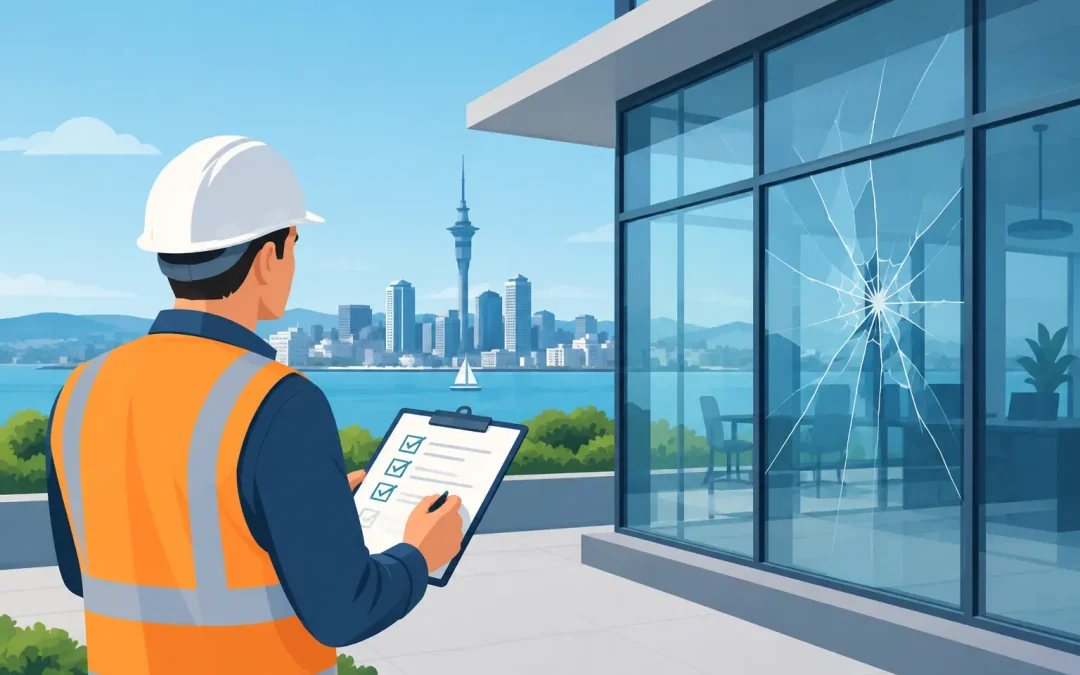
A smashed shopfront is not just a repair job. It can leave staff exposed to sharp glass, stock visible from the street and your premises difficult to secure overnight. This commercial glass damage checklist helps Auckland business owners, managers and property teams take the right steps in the right order – without turning a stressful incident into a bigger disruption.
First, make the area safe
Your first priority is people, not the pane. Keep staff, customers and contractors away from the damaged area, especially if glass is still loose in the frame or scattered across an entryway. If the damage is near a public footpath, doorway or busy work area, block access as soon as practical with barriers, cones or clear signage.
Do not ask staff to pick up larger shards or pull cracked glass from a frame. Toughened glass can collapse suddenly after it has been damaged, while broken laminated or standard glass may have sharp pieces held in place under tension. A glazier can assess what is safe to remove and what needs to stay put until the opening is secured.
If anyone has been injured, get medical help first. If the damage followed a break-in or suspected vandalism, avoid disturbing the immediate area more than necessary and contact the police before clean-up where appropriate.
Work through this commercial glass damage checklist
Once people are clear of the area, take a quick, calm look at the situation. You do not need to diagnose the glass type or decide on the final repair yourself. Clear information will help your glazier and insurer respond faster.
- Record what happened. Note the time, likely cause and whether the damage followed an impact, break-in, storm, accidental knock or a crack that appeared without an obvious event.
- Take photos from a safe distance. Photograph the full window or door, close-ups of the break, the frame and any affected stock, flooring or fittings. Include photos from inside and outside if it is safe to do so.
- Check the security risk. Can someone reach through the opening, unlock a door or enter the premises? Is stock, equipment or confidential material visible? These details affect how urgently temporary boarding or glazing is needed.
- Identify the location and size. Record the shopfront, office, internal partition, display cabinet, glass door or other affected area. A rough width and height is useful, but do not rely on it for ordering replacement glass. Final measurements should be taken on site.
- Look for related damage. Check the frame, hinges, locks, closers, seals and surrounding panels. A new pane will not solve the problem if a bent frame, faulty door closer or damaged lock is left behind.
- Protect stock and equipment. Move nearby products, electronics, paperwork and furniture away from rain, dust and possible glass fragments. Cover items only if you can do it without entering an unsafe area.
- Notify the right people. Let the building owner, property manager, security provider and insurer know what has happened. If your lease sets out a process for damage, follow it early.
This is also a good time to decide whether the site can safely stay open. A small crack in an internal office partition may be able to wait for a scheduled replacement. A broken external door, ground-floor window or shopfront usually needs prompt attention because security and weather protection are already compromised.
Secure the opening before the next shift
Temporary boarding or a short-term safe barrier can be the sensible first step when replacement glass is not immediately available. It protects the premises, reduces weather exposure and gives you time to confirm the correct glass specification. For a retail frontage, it can also prevent an exposed opening from becoming a repeat target.
There is a trade-off. Boarding is practical for security, but it can affect shop visibility, natural light and customer access. If the damage is at your main entrance, ask whether a safe alternative entry can remain available while the work is arranged. For offices, warehouses and strata-managed buildings, make sure staff know which doors or routes are temporarily out of use.
Do not use loose cardboard, thin plastic or tape as a substitute for proper securing. These materials may keep out a light breeze, but they do little for security and can create another hazard. A professional temporary solution is safer and easier to manage, particularly after hours.
Keep your team informed
A short message to staff can prevent accidents and unnecessary calls. Confirm the affected area, whether the site will open as usual, what entrance to use and who to contact if they notice further damage. If a customer-facing entrance is restricted, place clear temporary signs before opening time.
Give your glazier the details that matter
A qualified glazier will inspect, measure and recommend the right replacement, but a few details can speed up booking and quoting. Explain whether the glass is external or internal, fixed or part of a door, single or double glazed if known, and whether it has tinting, frosting, safety markings, a manifestation strip or signage applied to it.
For commercial sites, the replacement may need to match existing safety glass, thermal performance, privacy needs or appearance. A clear pane may restore the opening quickly, but it may not be the right long-term choice for a high-traffic door, a street-facing shopfront or a meeting room where privacy matters. It depends on the location, the frame and the purpose of the glass.
If the damaged panel is in a glass door, mention any issues with the door itself. Does it scrape, slam, fail to latch or sit unevenly? These are useful clues. Replacing the glass without checking the hardware can leave the new panel vulnerable to another impact.
Manage insurance and landlord approvals early
For insured damage, keep invoices, photos and written notes together from the start. Your insurer may require a claim number, an incident report or confirmation of emergency works. Ask what they need, but do not delay essential safety measures while waiting for paperwork if the premises cannot be secured.
Tenants should also check their lease or contact their property manager before approving non-urgent work. Responsibility can vary depending on the cause of damage and the part of the building involved. External glazing, common-area glass and internal fit-out glass may be treated differently.
The practical goal is simple: make the site safe first, then get clear approval for the permanent repair. A glazier experienced with commercial work can provide a clear scope of work that helps property managers and insurers understand what needs replacing and why.
Prevent the same damage happening again
Not every break can be prevented, but the repair is a useful chance to look at the cause. If a trolley, pallet jack or delivery route caused the damage, add a guard, bollard or clearer separation between traffic and glazing. If a door closer is slamming doors, adjust or repair it before the new glass is fitted.
Repeated cracks can also point to movement in the frame, building settlement, poor edge clearance or a panel that was not suited to its location. In these cases, replacing like for like may be cheaper immediately but cost more if the issue returns. Ask your glazier to explain whether a different glass type, thickness or fitting method would make better sense.
For customer areas, keep glass visible. Decals, manifestation strips and well-placed signage help people notice full-height panels and doors, particularly where reflections or bright sunlight make the glass hard to see. They are a small addition that can prevent a painful and expensive accident.
A broken pane does not need to stop your business for long, but it does need a sensible response. Make the area safe, secure the premises, document the damage and arrange a professional assessment. Glass Direct can help Auckland businesses move from broken glass to a clean, secure site with less fuss – you smash it, we fix it.