
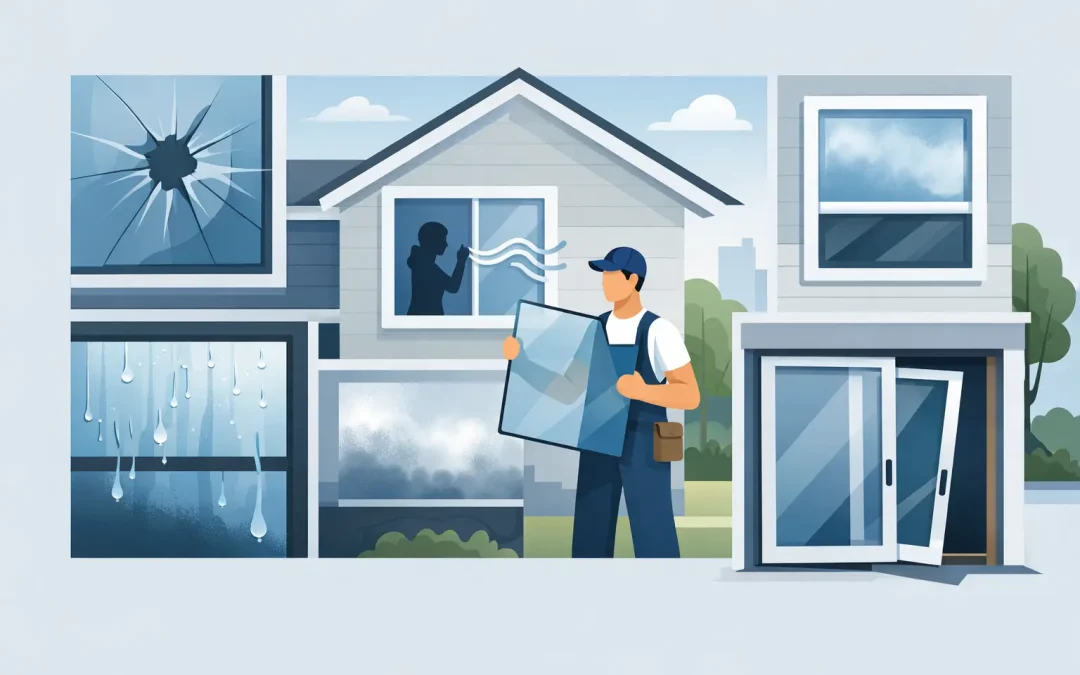
A cracked pane is obvious. A cloudy double-glazed window, a wobbly mirror or a door panel that no longer closes cleanly can be easier to put off. But those smaller issues can affect safety, security and comfort just as quickly. Knowing the five signs glass needs replacement helps you act before a minor fault becomes a broken window, a cut foot or an exposed property.
Glass does not always need replacing at the first mark. Some surface scratches, minor hardware adjustments and certain small chips may have another solution. The right call depends on the glass type, where it is fitted and whether it is still safe. A qualified glazier can assess it properly, measure the opening and explain the practical options without overcomplicating things.
Five signs glass needs replacement
1. The glass is cracked, smashed or chipped at the edge
A smashed pane needs prompt attention, even if most of the glass is still sitting in the frame. Loose shards can fall without warning, and a broken window or door is an easy entry point for weather, pests and unwanted visitors. Keep children and pets away from the area, avoid touching loose glass, and arrange for the opening to be made safe and reglazed.
Cracks deserve the same attention. A fine crack may look stable one day and spread across the pane after a change in temperature, a door slam or a knock from a ball. Cracks that run from an edge are particularly concerning because the edge is where much of the glass’s strength is compromised. Chips around corners, cut-outs and handle areas can also weaken the panel.
For a small chip in a low-risk location, repair may sometimes be possible. However, replacement is generally the safer option when the damage is in a door, shower screen, balustrade, shopfront, large window or any area likely to be bumped again. Safety glass is designed to reduce injury if it breaks, but it still needs replacing once damaged.
2. Your double glazing looks foggy between the panes
Condensation on the room side of a window can simply mean there is moisture in the house. Cooking, showers, drying clothes and poor ventilation can all cause it. Condensation between the panes of a double-glazed unit is different. It usually means the sealed unit has failed and moisture has entered the gap.
You may notice a misty patch that comes and goes, streaks that cannot be cleaned from either side, or a dull appearance that makes the view look permanently dirty. Once the seal is gone, the insulating performance of the unit is reduced. That can mean colder rooms in winter, more heat entering during warm weather and more demand on heating or cooling.
The frame does not always need to be replaced with the glass. If it is sound and suitable for a new unit, a glazier may be able to replace the failed insulated glass unit only. If the frame is warped, rotten, heavily corroded or no longer holds the glass securely, a wider repair may make better sense. An on-site measure is the best way to avoid guessing.
3. The panel rattles, moves or no longer sits securely
Glass should sit firmly in its frame, door or fitting. If a window rattles in the wind, a sliding door panel feels loose, or glazing beads and seals are lifting away, do not assume it is just an annoyance. Movement can place pressure on the glass edge and lead to cracking. It can also let in rain and draughts, which may damage surrounding timber, plasterboard or flooring.
This is common in older windows, frequently used doors and commercial premises where glass is exposed to regular vibration. Ageing rubber seals can shrink or harden. Timber frames can swell and contract. Door rollers, hinges or locks can fall out of adjustment, putting uneven pressure on a glass panel.
Sometimes the fix is a frame, seal or hardware repair rather than new glass. But if the pane has been rubbing, has edge damage, or is no longer the right type of safety glass for the location, replacement is often the sensible long-term fix. A properly fitted panel should be secure, weather-tight and easy to use.
4. A mirror, tabletop or shower panel has damage in a high-use area
Not all glass problems involve windows. A cracked bathroom mirror, a chipped glass tabletop or a damaged shower screen can be just as hazardous, especially in a busy family home or rental. These items are often touched, cleaned and bumped at close range. A small defect can turn into a sharp edge where hands, bare feet or children are nearby.
With mirrors, look for cracks, lifting edges or dark patches behind the reflective surface. Dark spotting is not always an immediate safety issue, but it can indicate deterioration that will continue over time. If a mirror has a crack, do not rely on tape as a lasting repair. The panel may still shift or shed pieces.
For tabletops, damage near an edge or corner is more serious than a light surface scratch in the middle. The same goes for shower glass. Any crack, chip, loose fitting or door that drags should be checked quickly. Shower panels need the correct toughened safety glass and fittings designed for a wet environment. Replacement can also be a chance to improve the layout, such as fitting a better-sized panel or updating tired hardware.
5. The glass no longer provides the safety, privacy or comfort you need
Sometimes glass is intact but no longer fit for purpose. An older bathroom window may offer little privacy. A thin single-glazed pane may make a bedroom uncomfortably cold and noisy. A glass door that needs a pet flap may require a purpose-cut replacement panel rather than cutting into existing toughened glass, which cannot be altered after toughening.
Safety requirements are another reason to replace glass. Areas close to floors, doors, stairs, pools or busy walkways may need safety glass because of the risk of human impact. This is particularly worth checking after a renovation, when changing the use of a room, or when preparing a rental property for new tenants. A clear pane that has been in place for years is not automatically suitable for every location.
Replacement can be practical rather than cosmetic. Options may include obscured glass for privacy, laminated glass for improved security and noise reduction, toughened safety glass for higher-risk spaces, or upgraded glazing for comfort. The best choice depends on the opening, the frame, your budget and what the room needs day to day. There is no value in paying for a premium option if a straightforward replacement will do the job properly.
What to do while you wait for a glazier
If glass is broken, make the area safe first. Keep people and pets clear, wear closed shoes if you need to pass nearby, and do not press on cracked glass or try to remove a large pane yourself. Small loose pieces can be carefully collected only if it is safe to do so, but leave unstable panels and glass in overhead or door openings alone.
For a shop, office or rental property, take clear photos of the damage and note the panel location. This can help with arranging access, giving an initial description of the job and speaking with an insurer if needed. If security is affected, temporary boarding or a prompt make-safe service may be appropriate before the final replacement glass is ready.
Glass Direct helps Auckland homeowners, landlords and businesses with broken windows, household glass, mirrors, shower glass and custom replacement panels. The process should be straightforward: assess the damage, measure accurately, explain the suitable glass, install it neatly and leave the area clean.
If you are unsure whether a mark is cosmetic or a real risk, treat changes in the glass as worth checking. A quick professional assessment can give you a clear answer and help keep your property safe, secure and comfortable.