
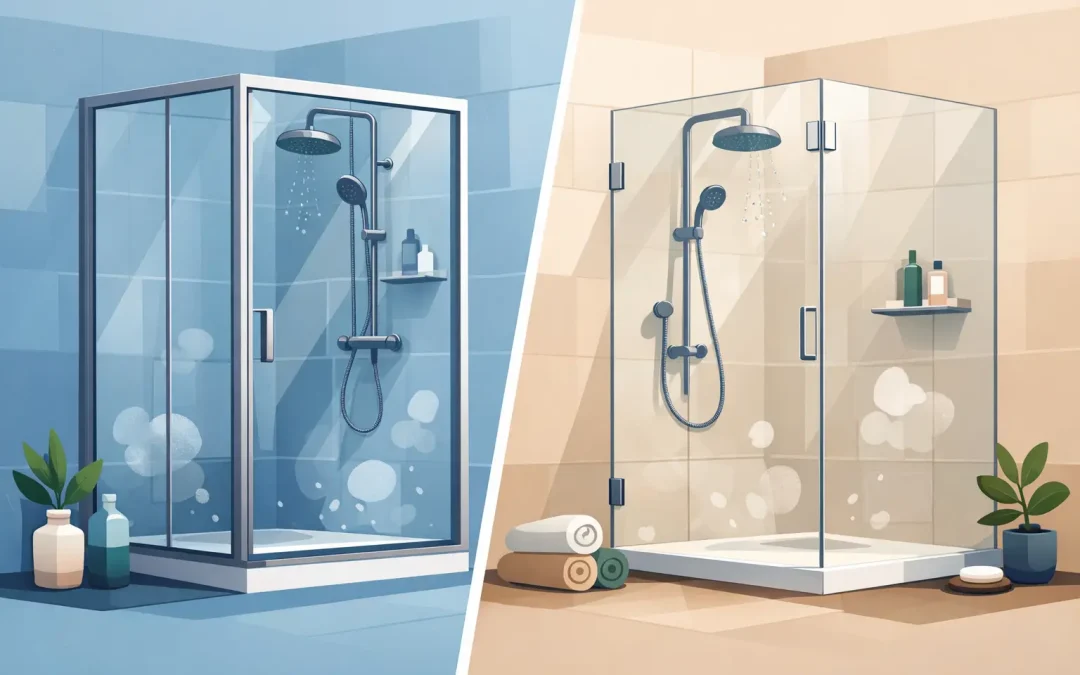
A shower that looks great but leaks onto the floor, traps grime in hard-to-reach corners or makes a small bathroom feel closed in soon becomes a daily annoyance. When comparing framed versus frameless shower screens, the best choice is not simply the one that looks most expensive. It is the screen that suits your bathroom layout, budget, cleaning routine and the condition of the walls and floor it needs to attach to.
Both options can be safe, long-lasting and attractive when they are measured properly and installed by qualified glaziers. The difference is in how they are supported, how much visual weight they add to the room and how forgiving they are when an existing bathroom is not perfectly square.
What is the difference between framed and frameless shower screens?
A framed shower screen uses an aluminium frame around the edges of the glass. The frame supports thinner safety glass, holds the door components in place and includes seals or channels that help contain water. It is the familiar practical option seen in many family bathrooms, rental properties and renovations where value matters.
A frameless shower screen uses thicker toughened safety glass with minimal visible hardware. Instead of a perimeter frame, the panels are secured with purpose-made hinges, brackets and channels. The result is a cleaner, more open look, with less metal interrupting the view across the bathroom.
There is also a middle ground. Semi-frameless screens generally have a frame around fixed panels but use a more streamlined door edge and less obvious aluminium. They can offer a lighter look than a fully framed screen without the cost or site requirements of a fully frameless design.
Framed versus frameless shower screens: the practical differences
The right screen often becomes clearer once you think about how the bathroom is used, rather than just how it will photograph on completion.
Appearance and sense of space
Frameless glass is a popular choice for compact bathrooms because it allows the eye to travel across the room. Clear, uninterrupted glass can make feature tiles, a freestanding bath or a well-finished vanity stand out. It suits modern renovations where a simple, uncluttered finish is the goal.
Framed screens have more visible lines, particularly around the door and wall edges. That does not make them unattractive. A neat frame can give the shower a defined, tidy look, and available finishes can complement taps, towel rails and other fittings. In a busy family bathroom, visual simplicity may matter less than dependable day-to-day performance.
If privacy is a concern, either style can use obscured, patterned or tinted glass, subject to the design. Keep in mind that heavily textured glass may take more effort to clean than a smooth clear panel.
Cleaning and upkeep
This is where frameless screens have a genuine advantage. With fewer channels and frame edges, there are fewer places for soap residue, limescale and moisture to sit. A quick squeegee after showering and regular cleaning with a glass-safe product will go a long way towards keeping the panels clear.
Framed screens need a little more attention around the lower track, seals and corners. These areas can collect shampoo residue and dust, especially in a bathroom with limited ventilation. The frame itself is not difficult to maintain, but it benefits from regular wiping and occasional cleaning with a soft brush.
Frameless does not mean maintenance-free. Hinges, seals and brackets still need to be kept clean, and hard water marks can show readily on large clear panels. If no one in the household is likely to squeegee the glass, choose a design that will still look good with a realistic cleaning routine.
Cost and what drives it
Fully framed shower screens are usually the more budget-friendly option. They commonly use thinner glass because the aluminium frame provides much of the structural support. They are often a sensible choice for landlords, first-home renovations and bathrooms that need a reliable refresh without pushing the budget too far.
Frameless screens generally cost more because they use heavier toughened glass and specialised hardware. Installation can also be more involved. Each panel needs precise measuring, and the walls, floor and tile finishes need to provide suitable fixing points and clean lines.
The final price is not just about the style of screen. A simple fixed frameless panel may be less complex than a large framed enclosure with sliding doors. Door type, glass thickness, hardware finish, custom angles, access to the site and the condition of the bathroom all affect the job.
Water containment
A framed screen is usually more forgiving when preventing splashes and minor water escape. Its channels and seals create defined barriers around the glass, which can be useful in a shower used by children or in a tight bathroom where water quickly reaches the vanity or doorway.
A well-designed frameless screen can also contain water effectively, but its success depends on the layout. The size and position of the opening, shower-head direction, floor fall and drain placement all matter. Some frameless designs intentionally have small gaps at the door edge, so they are not ideal for every shower configuration.
Before choosing a screen, consider where the water actually goes when someone is showering. A fixed panel may look sharp, but if the shower head faces directly towards its open edge, the design may need adjusting. Good glazing advice should account for this before the glass is ordered.
Strength, safety and longevity
Both framed and frameless screens should be made from safety glass appropriate for shower use. Frameless panels are thicker to allow them to span wider areas without a surrounding frame, while framed systems rely on their aluminium structure as well as the glass.
A frameless screen is not automatically stronger simply because the glass is thicker. It relies heavily on accurate measurements, suitable wall fixings and correctly fitted hinges or brackets. A poorly supported heavy panel can cause problems regardless of how premium the hardware appears.
Framed systems have more individual components, such as tracks, rollers and seals, which may eventually need adjustment or replacement. Frameless systems have fewer visible parts but place more demand on hinges and fittings. In either case, a door that starts dragging, rubbing or failing to close properly should be checked early rather than forced.
When a framed screen makes more sense
Choose framed glass when you want a practical, cost-conscious enclosure with strong water control. It is often well suited to rental properties, family bathrooms and replacement projects where the existing shower footprint is staying much the same.
It can also be the better option if walls are slightly out of plumb or tile edges are not perfectly even. Frames can accommodate small site variations that a minimal frameless design may expose. That flexibility can save unnecessary alteration work during a renovation.
Sliding framed doors can be particularly useful where there is not enough room for a hinged door to swing outward. In a narrow bathroom, that functional detail can matter more than the difference in style.
When frameless is worth the extra spend
A frameless screen is often worth considering when you are renovating for a more open, contemporary bathroom and want the glass to fade into the background. It works especially well with quality tiling, walk-in showers and layouts where a fixed panel can provide generous access without a door.
It is also a good fit when easier cleaning is high on the list. Fewer tracks and frame edges make a noticeable difference over time, particularly in a main bathroom used every day.
However, it needs the right setting. The glass must be accurately custom-fitted, and the shower floor needs a suitable fall towards the drain. If the walls are uneven, the waterproofing is uncertain or the layout already struggles with splashing, a simpler framed or semi-frameless option may deliver better value and fewer compromises.
Details to settle before ordering shower glass
A shower screen is not a product you should choose by a catalogue photo alone. The opening needs measuring on site, as tiled walls can vary from top to bottom and floors are rarely perfectly level. The screen also needs to work around the shower head, mixer, vanity, toilet and door swing.
Talk through who uses the bathroom and how. A walk-in panel may suit adults but leave a chilly opening for a child’s shower. A hinged door needs clearance. A sliding door saves space but has tracks to clean. If you want black, brass or chrome hardware, make sure the finish works with the fittings already selected.
For existing bathrooms, inspect the surrounding area before installation. Loose tiles, movement in the wall, damaged silicone or signs of water damage need attention first. A new screen cannot solve a leaking shower base or failed waterproofing behind the tiles.
Glass Direct can measure the space, explain what will work with the existing bathroom and arrange a custom-fit screen that is practical as well as good-looking. Getting the layout right before fabrication is the simplest way to avoid costly changes later.
The best shower screen is the one you barely have to think about once it is installed: it keeps water where it belongs, opens comfortably, cleans without a battle and suits the way your household actually uses the bathroom.