
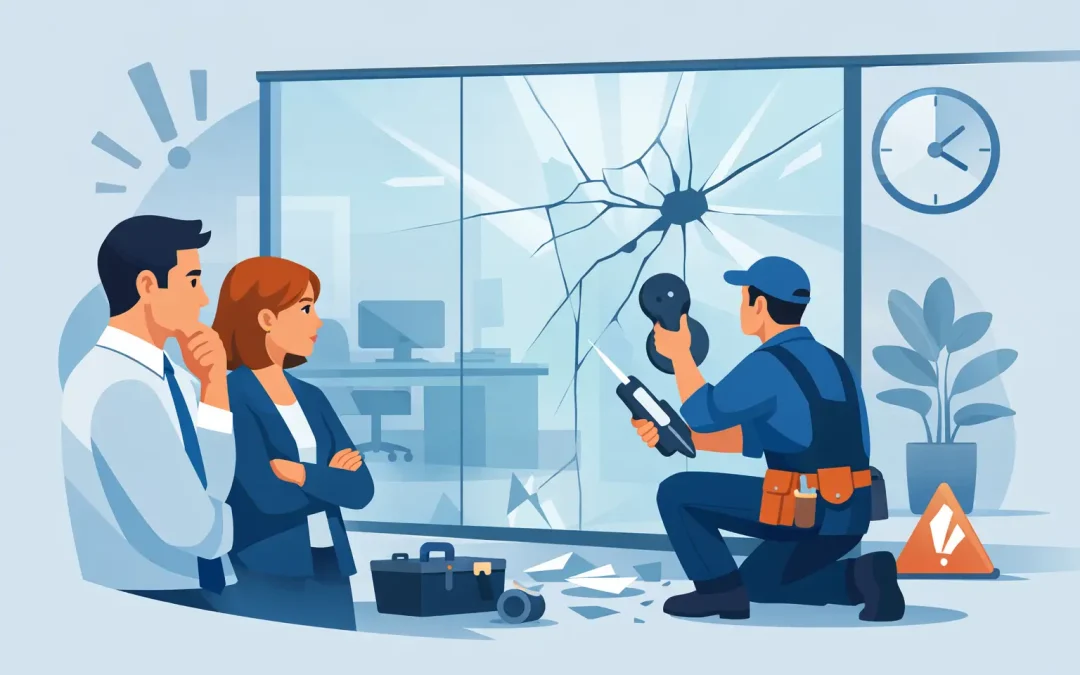
A cracked glass partition can look like a minor office maintenance job until someone brushes past it, a door is shut, or the crack suddenly spreads across the panel. In a busy workplace, damaged glass affects more than appearance. Office glass partition repair is about making the area safe, restoring privacy and security, and getting your team back to work with as little disruption as possible.
Whether the damage is a chipped edge, a shattered door panel or a long stress crack, it is worth having a qualified glazier assess it promptly. Glass partitions are often large, fixed in specialised fittings and positioned where staff, clients and visitors move through all day. This is not a repair to leave for the next maintenance round.
Why damaged office glass needs prompt attention
Glass partitions help offices feel open while still creating meeting rooms, quiet spaces and practical divisions between teams. When one panel is damaged, it can quickly make an otherwise professional space feel unsafe or neglected.
The immediate concern is injury. Even a small chip can leave a sharp edge, while a crack weakens the panel and makes further breakage more likely. If the glass is in a door, beside a walkway or near reception, the risk is higher because it is regularly exposed to movement, vibration and accidental knocks.
There is also the question of security and privacy. A broken partition around an office entrance, boardroom or restricted area can affect access control. Frosted, tinted or decorative glass may be part of the room’s privacy design, so replacing it with the wrong product can leave staff and clients more exposed than intended.
For landlords and property managers, acting quickly also helps prevent a small issue becoming a more expensive one. Loose fragments can damage frames, floor coverings or nearby furniture. A clean, professional repair protects the building as well as the people using it.
Signs office glass partition repair is needed
Not every issue means the whole panel must be replaced immediately, but any damage deserves a proper look. A qualified glazier can tell whether the glass, frame, hardware or installation is causing the problem.
A visible crack is the clearest sign. Cracks can start at an edge, near a fixing point or after an impact, then travel over time as the glass responds to temperature changes and everyday vibration. Do not assume a crack has stopped just because it has not grown overnight.
Chips and damaged corners need attention too. They may appear harmless, particularly on toughened glass, but edge damage can compromise the strength of the panel. Scratches are more of a judgement call. Light surface marks may be acceptable in a low-traffic back office, while scratches on a reception partition or meeting-room wall can make the whole fit-out look tired.
Other warning signs include rattling panels, doors that scrape or no longer close properly, loose seals, damaged glazing beads and cloudy patches in double-glazed units. These problems may not be a glass breakage issue alone, but they can affect safety, insulation and the way the partition performs.
What to do before the glazier arrives
The first job is to keep people away from the damaged area. If there is broken glass on the floor, restrict access with chairs, signage or temporary barriers where practical. Keep staff, children and visitors clear, especially around doorways and narrow passages.
Avoid pressing on cracked glass, trying to remove it from the frame or applying tape directly across a severely damaged panel. Tape can be useful for holding a small amount of loose debris in place while help is arranged, but it is not a repair. Moving a compromised panel can cause it to fail completely.
If a partition has shattered or left an opening into a secure part of the office, consider how you will protect the area until repairs are completed. This may mean moving sensitive documents, locking adjacent rooms or arranging temporary boarding. Take a few clear photos for your records and insurance claim before clean-up begins, provided it is safe to do so.
A professional glazier will usually ask for the approximate size of the panel, where it is located and whether the glass is cracked, broken or missing. Photos can help identify the likely glass type and allow the job to be planned properly. That said, accurate measuring should happen on site. Office partitions often have custom dimensions, specific frame channels and fittings that cannot be judged reliably from a photo alone.
Repair or replacement: what is the right answer?
The word repair can cover several different jobs. A loose frame, worn seal or misaligned glass door may be repaired without replacing the glazing. However, cracked or shattered safety glass generally needs replacement rather than a patch-up.
For many internal office partitions, toughened safety glass is used because it is designed to break into small, less hazardous pieces when it fails. Once toughened glass is cracked, it cannot be cut, drilled or repaired. It must be carefully removed and replaced with a new panel made to the correct size.
Laminated safety glass is different. It uses layers bonded with an interlayer that can help retain broken pieces after impact. It may remain standing after damage, which can provide a short-term safety benefit, but it still needs assessment and replacement. The intact-looking surface does not mean the panel is suitable for ongoing use.
The best replacement is usually like-for-like, but this depends on the partition’s purpose. A boardroom may need frosted film, acoustic glass or a particular tint to maintain privacy. A high-traffic entrance may benefit from a more suitable safety-glass specification. If the existing design has repeatedly been damaged, it may be worth discussing a different configuration, protective manifestation markings or adjustments to nearby door hardware.
A proper glass partition replacement process
Good office glass partition repair starts with an assessment, not a guess. The glazier checks the glass type, thickness, frame condition, fittings and access requirements. This is particularly important in older offices where partitions may have been altered over time or replacement panels are no longer a standard size.
The damaged glass is then removed safely, with care taken to protect nearby floors, desks and finishes. In a working office, timing matters. Some work can be completed outside peak hours or in stages to reduce noise and keep key areas accessible.
The replacement panel is measured and supplied to suit the opening and intended use. Once installed, the glazier checks that it sits correctly in the frame, seals and hardware are secure, and doors operate as they should. A tidy clean-up matters too. Tiny glass fragments can travel further than expected, so the work area should be left safe for staff to return.
At Glass Direct, the approach is straightforward: assess the damage, explain the practical options, arrange the replacement and leave the area clean and safe. That is especially useful when a property manager is coordinating tenants, building access and an insurance claim at the same time.
Keeping partitions in good condition after repair
Glass partitions are durable, but they are not maintenance-free. Encourage staff to avoid slamming glass doors, hanging items from handles or pushing furniture against panels. Door closers and hinges should be checked when a door starts dragging or shutting too hard, as repeated impact can place unnecessary stress on the glass and fittings.
Use suitable glass cleaner and a soft cloth rather than abrasive pads or harsh products. The glass may tolerate plenty of daily use, but frames, seals and decorative finishes can deteriorate if cleaned with the wrong chemicals.
It also helps to make clear glass visible. Manifestation dots, stripes or other compliant markings can reduce walk-into-glass accidents, particularly where partitions sit along bright corridors or beside open-plan workspaces. If the office layout changes, review whether the existing markings are still easy to see.
A damaged partition does not need to throw the whole office into chaos. Keep the area clear, get the panel assessed and choose a replacement that suits the way your workplace actually operates. A prompt, well-measured repair lets people get on with their day without having to work around a safety risk.