
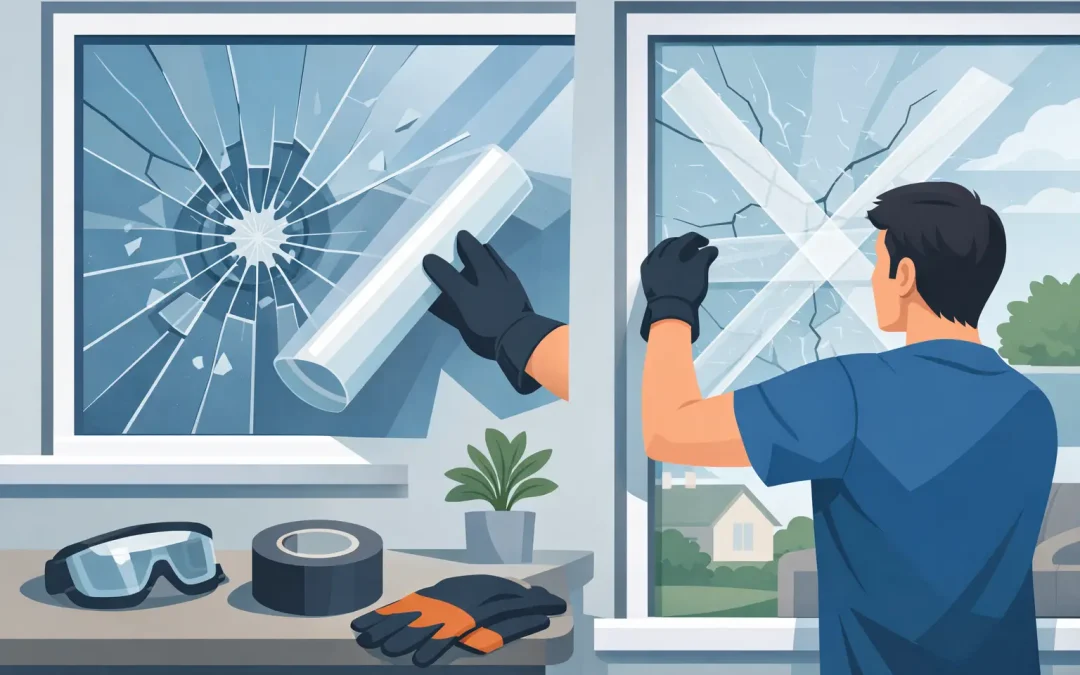
A shattered window changes the rules straight away. Before anyone starts sweeping, taking photos for insurance or checking the damage, you need to make a shattered window safe for the people nearby. Loose shards can travel further than expected, a damaged pane may keep dropping glass, and an open frame can leave your home or premises exposed to weather and intruders.
The good news is that you do not need to solve the whole repair yourself. Your job is to reduce the immediate risk, protect the area and arrange a qualified glazier to assess and replace the glass properly.
First, keep everyone back
Create space around the broken window before doing anything else. Keep children, pets, customers and anyone without suitable footwear well away from the area. If the window is beside a walkway, entrance or shared part of a building, block access with a chair, table, cones or another visible barrier placed well back from the glass.
Do not let anyone step over broken glass to inspect the damage. Fine pieces can spread across carpet, tiles, timber floors and outdoor paving, while larger pieces may still be caught in the frame. Closing an internal door to the room can be useful, provided you can do so without passing through the danger area.
If the damage is in a shopfront, office or rental property, tell occupants what has happened and direct them around the area. A quick, clear warning prevents the common mistake of someone walking in before they have seen the broken pane.
Make a shattered window safe without touching the risk
Look at the window from a safe distance. Is most of the glass still sitting in the frame? Are there large pieces hanging loose? Has the glass fallen inwards, outwards or both? These details help you decide whether the space needs simple containment or a more secure temporary barrier.
Avoid pushing, pulling or trying to knock out glass that remains in the frame. What looks stable can release suddenly. This is particularly true with toughened glass, which may break into many small pieces, and with larger panes that can be heavy even after they crack.
Put on closed shoes with solid soles before you go anywhere near the area. Gloves and safety glasses are sensible if you need to remove loose pieces from the floor, but they are not a reason to handle unstable glass in the frame. Long sleeves and trousers offer extra protection from small cuts.
If there is a serious injury, significant bleeding or a person trapped by glass, seek urgent medical help first. Window repair can wait.
Switch off nearby hazards
Check whether there are electrical points, appliances or cords near the broken window. If rain is coming in, move portable electronics away from the opening without crossing over glass. Do not use water to clean the area, as it can carry fine shards into wider parts of the room.
For windows near a stove, heater or open flame, turn the heat source off if it is safe to do so. Wind can also make a damaged pane less stable, so keep the area calm and avoid slamming nearby doors.
Clean up only the glass that has already fallen
Once people are clear and you have suitable footwear, pick up larger loose pieces from the floor with heavy gloves. Place them carefully in a rigid container, such as a sturdy box or bucket, rather than a thin rubbish bag that could tear. Keep the container out of reach of children and clearly mark it as broken glass.
For smaller pieces on hard flooring, use a broom and dustpan, working from the outside of the affected area towards the centre. Do not sweep aggressively. Slow, short strokes reduce the chance of sending sharp fragments further across the room.
A vacuum can help with tiny pieces after the larger glass is removed, especially along skirting boards, under furniture and in carpet. Check the vacuum bag or canister carefully afterwards. For smooth surfaces, pressing a strip of strong tape onto the floor can lift the last fine splinters, but do not use tape on a cracked pane that is still in the frame.
Check shoes, pet paws and clothing before anyone leaves the area. Broken glass has a habit of travelling. If glass landed outside, inspect nearby paths, decks and garden edges as well as the immediate spot below the window.
Cover the opening and restore basic security
A temporary cover is about keeping weather, wind and people out until the repair is completed. It is not a replacement for glass, and it needs to be fitted without making the damaged frame worse.
For a small opening away from public access, a sheet of heavy plastic secured around the frame can help keep out light rain and drafts. Secure it to solid frame sections, not to remaining fragments of glass. Keep it taut enough that it will not flap in the wind, but do not put pressure on the damaged pane.
For a larger opening, a ground-floor window or a broken door panel, a rigid board is generally the safer short-term option. It should cover the whole opening and be fixed to sound parts of the frame by someone confident working around broken glass. Never nail, screw or drill through glass, and do not block an essential fire escape without arranging an alternative safe exit.
If you cannot cover the opening safely, leave the job alone and keep the room or area secured. A qualified glazier can remove the remaining glass, measure the opening accurately and provide a temporary solution where needed.
Think about the weather and the building
Rain can damage flooring, furnishings and plasterboard quickly, so move soft furnishings away from the window where possible. Put towels down on the inside only after loose glass has been cleared. If water is already entering, use a container to catch drips rather than trying to work close to unstable glass.
For commercial premises, security may be the bigger concern. Move stock away from the window, lock internal doors where appropriate and make sure staff know not to use the affected entrance. Take photographs of the damage from a safe position for your landlord, property manager or insurer before a repair is carried out.
What not to do after a window shatters
The quickest-looking fix is not always the safe one. Do not cover cracked or shattered glass with tape and assume it is secure. Tape may hold a few small pieces together, but it does not make a weakened pane safe and can make later removal harder.
Avoid using thin cardboard as an exterior weather cover. It softens when wet, tears in wind and offers very little security. Do not leave broken glass in a wheelie bin or loose rubbish bag either. Someone else could be injured when handling it.
It is also worth resisting the urge to measure and order a replacement pane yourself. Glass type, thickness, safety requirements and the way the pane is held in the frame all matter. A bathroom window, low-level window, glazed door, shopfront and older timber frame can each require a different approach.
Arrange a professional repair
Once the immediate area is safe, contact a glazing professional and describe what has happened. Mention the type of window or door, whether glass remains in the frame, the approximate size, where the property is located and whether the opening needs urgent securing. Photos taken from a safe distance are often helpful.
A qualified glazier can check the frame for damage, identify the correct glass and ensure the new pane meets the right safety requirements. This matters just as much for a small bedroom window as it does for a large commercial panel. A poor temporary repair can lead to leaks, rattling, further breakage or a security problem later.
Glass Direct helps Auckland homes and businesses with broken windows, doors, mirrors and other household glass. The focus is simple: get the hazard dealt with properly, fit the right replacement and leave the area clean and safe.
A shattered window is stressful, but the first steps are straightforward: keep people back, remove only the glass that has already fallen, protect the opening if you can do so safely, and get the repair booked. That gives everyone around the property the best chance of getting through the disruption without another problem.