
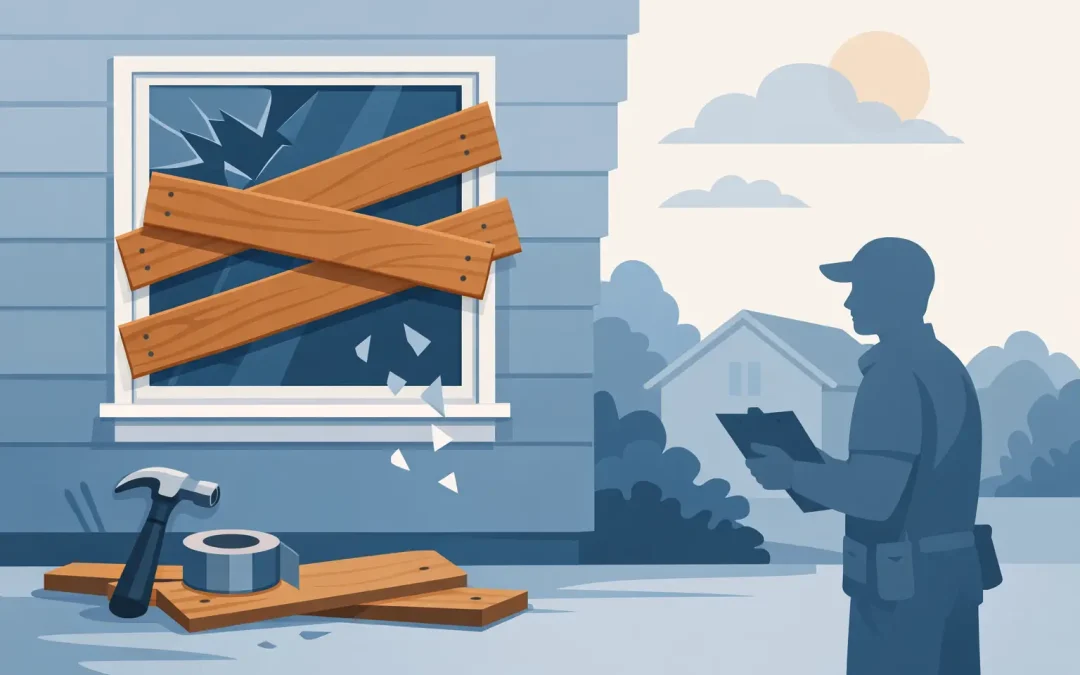
A smashed window changes the feel of a property straight away. There may be loose shards underfoot, rain blowing inside, a cold draught through the room, or a shopfront left exposed after hours. A temporary board up broken window solution can make the area safer and more secure while you arrange the correct replacement glass.
The key word is temporary. Boarding over an opening is useful damage control, but it is not a substitute for properly measured, fitted glazing. A sound board-up should protect people, limit weather damage and discourage unwanted entry without creating another hazard in the process.
First, make the area safe
Before thinking about timber, keep people and pets away from the broken window. Close off the room where possible, particularly if glass has fallen onto carpet, furniture or a deck. Put on enclosed shoes and heavy-duty gloves before moving any pieces of glass.
Do not press on cracked glass or try to pull large fragments from the frame by hand. Glass can appear stable and then give way without warning. If a pane is still partly in place, leave it alone unless it presents an immediate danger and a qualified glazier advises otherwise.
Collect only the loose pieces that can be safely reached. Use a brush and pan rather than your hands, then carefully check nearby soft furnishings, window sills and outdoor paths for smaller pieces. A vacuum can help with fine fragments, but it should not be your only check. Keep children and pets away until the area has been properly cleared.
If the opening is on an upper floor, beside a stairwell, near a pool area, or forms part of a commercial entrance, treat it as urgent. These situations have a higher risk of injury or access to the building, and they are best handled by a professional from the outset.
When a temporary board-up is the right call
A board-up is most useful when the window opening is fully exposed and replacement glass cannot be installed immediately. That may be because the glass needs to be cut to size, the frame needs assessment, weather conditions are poor, or the damage happens outside normal working hours.
For a ground-floor home window, it helps restore privacy and security overnight. For landlords and property managers, it can prevent further damage between inspection and repair. For a business, covering a broken pane can reduce disruption and make the premises safer until new glass is ready.
It depends on the window and the damage, though. A small crack in an otherwise intact pane often does not need boarding, but it should still be inspected promptly. A cracked safety-glass door, shattered shopfront or broken bathroom window is a different matter. The location, type of glass and risk of access all affect the safest response.
How to approach a temporary board up broken window
If you need to secure a straightforward, accessible opening before help arrives, use solid exterior-grade plywood rather than thin particleboard, cardboard or plastic sheeting alone. Plastic can stop light rain and reduce draughts for a short time, but it will not provide meaningful security and can tear in wind.
Measure the opening from the outside edge of the frame, not only the missing glass area. The board needs enough overlap to sit securely against sound timber, brickwork or framing. A board that is too small can shift, let water in or be easily pushed through.
Where possible, fix the board into the surrounding frame rather than through the remaining glass or into a damaged sash. Avoid forcing screws into aluminium frames unless you understand the construction, as this can cause further damage and make the later repair more complicated. For many homes and commercial properties, it is safer to have a glazier assess the best fixing point.
The board should sit flat without sharp edges facing walkways. Make sure screws, nails and splintered timber are not exposed where someone could catch clothing or skin. On a door, do not create a barrier that prevents safe exit from the building. Fire escape routes must remain usable.
Never use a board-up as a reason to delay a glazing repair. Timber can trap moisture against the frame, reduce ventilation and hide problems around the rebate or seals. It is a stopgap that buys time, not a finished repair.
Keep rain and wind from causing more damage
A broken pane can let in more than a draught. Auckland weather can shift quickly, and wind-driven rain may damage flooring, plasterboard, insulation, stock or electrical fittings near the opening.
Move valuables, electronics and fabric furnishings away from the window. Place towels or absorbent materials along the inside sill if water is entering, and use a waterproof cover on the outside only if it can be secured safely. Do not climb ladders in wet or windy conditions to tape up an upper-storey window. The fall risk is not worth it.
If water has reached power points, appliances or wiring, avoid touching the affected area and seek appropriate electrical advice. A glazier can secure the opening, but electrical safety needs its own qualified response.
Why a proper glass repair matters
Replacing a broken window is not simply a matter of fitting any pane into the gap. The correct glass depends on where it is installed and how the window is used. Doors, bathrooms, low-level windows and areas near stairs may require safety glass. Commercial premises may need tougher or specially specified glazing. Older frames can also need careful preparation before new glass is installed.
A qualified glazier will measure the opening accurately, identify the suitable glass and check whether the frame, beading, seals or hardware have also been damaged. That avoids the common problem of a replacement that looks fine on day one but rattles, leaks or does not sit correctly in the frame.
This is particularly relevant after an impact. A cricket ball, attempted break-in, fallen branch or slammed door can damage more than the visible pane. The frame may have shifted slightly, and surrounding glass can be stressed even if it has not yet cracked.
For insurance claims, take clear photos of the damage before cleanup where it is safe to do so. Photograph the broken window, the surrounding frame and any damage caused by rain or impact. Keep notes of the date, likely cause and temporary work completed. Your insurer may have a preferred process, but securing the property promptly is generally sensible.
What not to do after a window breaks
A few quick fixes can turn a simple replacement into a larger job. Do not tape over cracked glass and assume it is safe. Tape may hold a few loose fragments together, but it does not restore the pane’s strength. Avoid using household adhesive, expanding foam or sealants around the opening. These can damage frames and take extra time to remove.
Do not leave a broken window open because the weather looks settled. Overnight rain, wind or a change in temperature can make the situation worse. And do not let anyone lean against a boarded opening, especially children who may not realise there is no glass behind it.
Get the opening secured, then get it fixed
When glass breaks, the immediate goal is simple: prevent injury, protect the property and restore security. Once the opening is safely covered, arrange a professional inspection so the temporary board can come down as soon as the right glass is ready.
Glass Direct helps Auckland homeowners, landlords and businesses move from a broken pane to a clean, properly finished repair. You smash it, we fix it. A well-handled repair means the window is not just closed again – it is safe, weather-tight and ready to get back to normal.