
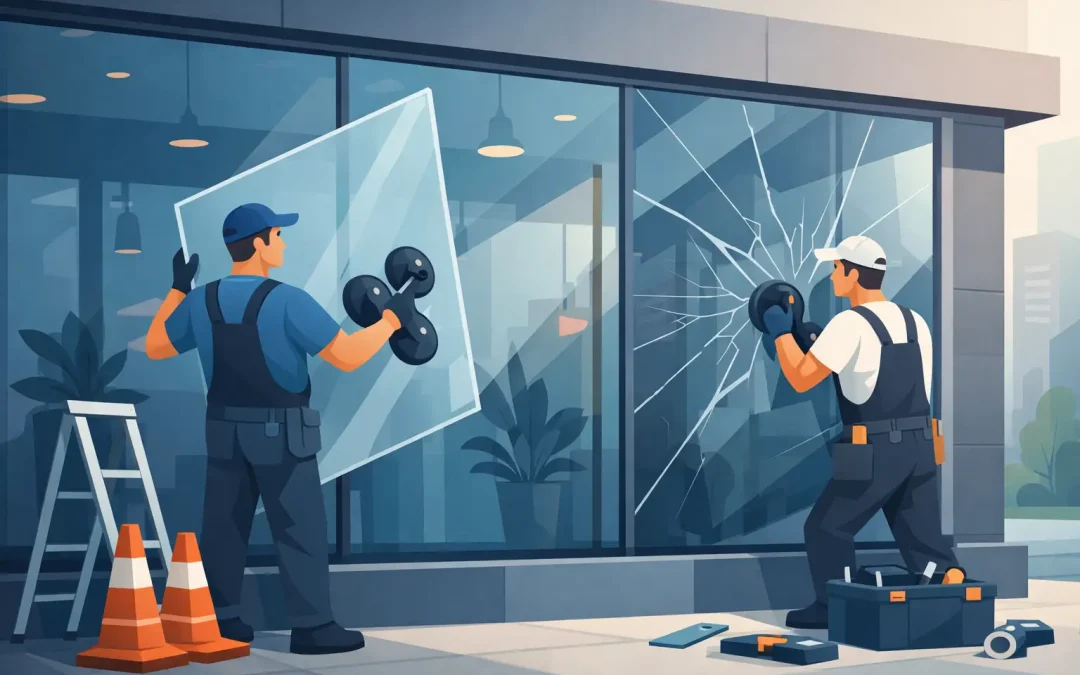
A cracked or smashed shopfront is more than an untidy first impression. It can leave your premises exposed, create a safety risk for staff and customers, and make it hard to trade as usual. Commercial shopfront glass repair is about getting the area safe quickly, then fitting the right replacement glass so your business can get back to normal.
Whether the damage came from an accident, a break-in, vandalism, weather or a trolley gone the wrong way, the first few hours matter. A prompt, well-managed repair protects your people, your stock and the confidence customers have in walking through your door.
Make the damaged area safe first
Broken glass should be treated as a hazard, even when the panel appears to be mostly intact. Cracks can spread under pressure, loose fragments can fall without warning, and small pieces are easily carried through the premises on shoes.
Keep customers and staff away from the affected area. If possible, block access with a clear barrier and move nearby displays, stock and furniture out of harm’s way. Do not ask staff to remove large pieces of glass or try to tape a badly damaged panel back together. Glass can shift suddenly, particularly in an aluminium shopfront frame where the panel is already under pressure.
If the break has left an opening, secure valuables away from the frontage and check that your alarm, locks and access points are still working. A temporary board-up may be needed where the opening cannot be safely left exposed before replacement glass is ready. This is especially useful for ground-floor retail, hospitality venues and offices with equipment close to the window.
Take a few photos once the area is safe. They can help a glazier assess the job before arriving and are useful for an insurance claim. Photograph the whole shopfront as well as the damage, including the frame, doors and any nearby fittings that may have been affected.
Why shopfront glass needs a proper assessment
It is tempting to see every broken pane as a straightforward replacement. Sometimes it is. But commercial glass has a job to do beyond filling a frame. It may form part of an entry system, provide visibility for displays, reduce street noise, help manage heat and glare, or meet safety requirements for a public-facing area.
A qualified glazier will look at the panel size, thickness, frame condition, position and likely cause of damage before recommending a replacement. This matters because installing glass that is unsuitable for the opening can create another safety issue or lead to repeat breakage.
For example, a panel beside a doorway, at low level, or in a busy customer area may need safety glass. Toughened glass is designed to break into small, less sharp pieces, while laminated glass holds together when broken because it has an interlayer between the panes. Each option has different benefits. Laminated glass can provide better retention after an impact, while toughened glass is often a practical choice for many shopfront applications.
The right answer depends on the location, the frame and the level of risk. If a break-in is a concern, the conversation may also include stronger glazing options, improved door glass, or ways to reduce the chance of damage happening again. It is worth addressing the cause where possible, rather than simply replacing the same panel and hoping for a different result.
Commercial shopfront glass repair with less disruption
For a business owner or property manager, the repair itself is only part of the job. You also need clear communication, a realistic timeframe and tradespeople who can work carefully around customers, tenants and staff.
A good commercial shopfront glass repair process starts with accurate information. When you call, share the approximate size and location of the damaged glass, whether the panel is completely broken or cracked, and whether the premises can be secured. Let the glazier know if the shop is open, if access is restricted, or if the work needs to happen outside busy trading hours.
On site, the glazier should inspect the damage, measure the opening properly and explain the next step in plain language. Some standard sizes and common glass types can be replaced quickly. Larger panels, custom shapes, tinted glass, double glazing or specialised safety glass may need to be ordered and cut to suit. In those cases, securing the opening first helps keep your premises protected while the correct replacement is prepared.
The installation should include more than putting a new pane into place. The frame, glazing channels, seals and beads need checking too. If a damaged seal or distorted frame is ignored, water, drafts and movement can shorten the life of the new glass. Once the work is complete, broken glass and job-related rubbish should be removed so your entrance is safe and presentable again.
When repair is possible and when replacement is safer
A superficial mark on glass may not always need replacement, but cracks and impact damage are different. A crack can travel across a panel over time due to temperature changes, vibration from doors, pressure in the frame or another small knock. On a shopfront, that is not a risk worth leaving for later.
Replacement is generally the safer option when the glass is cracked through, chipped near an edge, shattered, loose in the frame or damaged in a high-traffic area. It is also sensible to replace a panel if the damage affects visibility, security or weather protection.
There are occasional situations where a small scratch or minor surface issue can be assessed without replacing the glass. However, polishing or patching is not a cure for structural damage. A glazier can tell the difference and give you a clear recommendation without overcomplicating it.
Keep insurance and property management moving
Commercial glass damage can involve several people at once: the business owner, tenant, landlord, property manager, insurer and sometimes security or police. That can slow things down if nobody is clear on who is approving the work.
If the damage may be claimed through insurance, contact your insurer or broker as soon as practical and keep the photos, incident details and any police report number. Ask what information they need before permanent replacement work is arranged. In an urgent situation, make the premises safe first and keep records of the emergency work.
For property managers, it helps to have a simple process ready before anything happens. Keep after-hours contacts current, confirm who can approve urgent repairs, and note any building access requirements. A tenant should not be left wondering who to call while an exposed shopfront affects their ability to trade.
Glass Direct works with Auckland businesses and property managers to make this part easier, from measuring and quoting through to installation and cleanup. Clear updates matter when a damaged frontage is holding up trade or creating a security concern.
A few practical ways to prevent repeat damage
Not every break can be prevented, but a quick review after an incident can save trouble later. Check whether outdoor furniture, displays or delivery areas are too close to the glass. If a door regularly swings into a fixed panel, a door stop or closer adjustment may prevent another impact. Where trolleys, bins or loading activity pass near the frontage, physical protection can be worth considering.
For businesses that have experienced forced entry, ask about glass choices that better suit the risk. Stronger glass can delay entry and keep broken panels together, but no glazing option makes a storefront invulnerable. Security is usually most effective when glass, locks, lighting, alarms and good sightlines work together.
Also pay attention to early warning signs. Rattling panels, failing seals, chips near the edge of a pane, doors that scrape, or a frame that has started to move should be checked before a small problem becomes an urgent call-out.
A damaged shopfront does not need to turn into days of uncertainty. Keep people clear, secure the opening, document the damage and arrange an assessment from a qualified glazier. The right repair gets your premises safe, your frontage looking professional and your business ready to welcome customers again.